Muslim Identity & the Nation-State: Critiquing Wael Hallaq
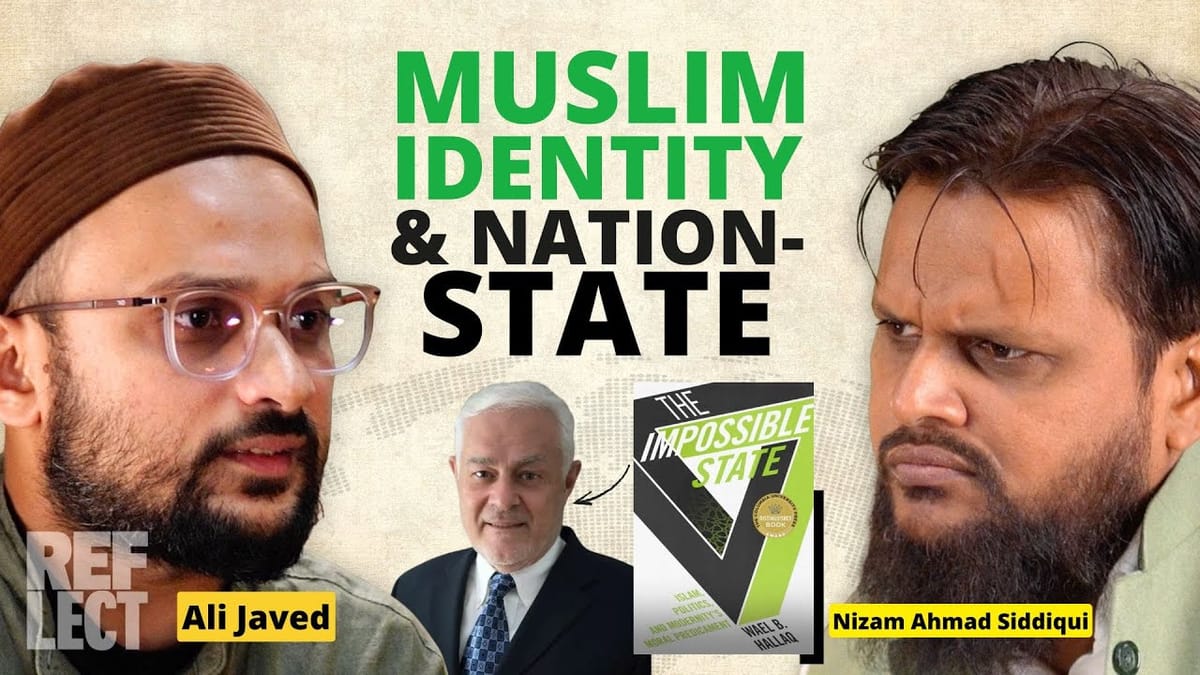
Revisiting Hallaq’s critique of the modern state, the episode highlights how both the ‘Islamic polity’ and the ‘nation-state’ are often theorized through idealized, hypothetical models that never fully existed in practice.
We trace the historical role of Jamiat, Deoband, and other Muslim institutions that emerged in periods of relative intellectual freedom, and ask why post-Independence Muslim movements appear largely derivative. The conversation also explores whether Indian Muslims today experience a form of ‘exception,’ where rights and responsibilities diverge sharply in lived reality—visible in ghettoization, insecurity, and an increasingly ‘alien’ political direction.
The episode ultimately asks: How can Islamic intellectual traditions be re-articulated within today’s expanded epistemic and political landscape?
Books mentioned in this podcast:
1. Political Theory & The State
- Wael Hallaq:
- The Impossible State: The most frequently cited work in the conversation. It argues that the modern "Nation-State" (based on Enlightenment materialism) and "Islamic Governance" (based on moral/divine sovereignty) are structurally incompatible.
- Giorgio Agamben:
- State of Exception: Referenced to describe the condition where a citizen’s rights are suspended by the state within the framework of the law itself. The speakers debated whether Indian Muslims are currently living in this "State of Exception."
- Carl Schmitt:
- Political Theology: Mentioned in the context of how liberal secularism imposes its own version of "theology" and the friend/enemy distinction in politics.
2. Indian Muslims, History & Identity
- SherAli Tareen:
- Perilous Intimacies: Debating Hindu-Muslim Friendship After Empire: (Referred to as "Parallel Intimacy" in the flow of conversation). This book discusses how pre-modern Muslim scholars navigated friendship and boundaries with non-Muslims, which the speakers related to the current political crisis.
- Hasan Suroor:
- Unmasking Indian Secularism: Why We Need a New Hindu-Muslim Deal: Cited regarding the argument that the old "secular deal" in India has collapsed and a "re-negotiation" of the Hindu-Muslim social contract is necessary.
- Richard Eaton:
- India in the Persianate Age: Ali Javed referenced a previous podcast with Eaton to discuss how Mughal rulers like Akbar and Aurangzeb utilized "modern" state-building techniques (bureaucracy, rule of law) long before the Western Nation-State existed.
- Zubair Abbasi:
- Referenced for his academic articles on Waqf and corporate governance, specifically regarding how institutions like Hamdard Laboratories survived the Partition and exist in both India and Pakistan.
3. Islamic Thought & Reform
Allama Iqbal:
- The Reconstruction of Religious Thought in Islam: Discussed extensively regarding Iqbal’s concept of Khudi (Selfhood) and his attempt to reconstruct Muslim political identity in the face of colonial modernity.
- Abdul Hamid AbuSulayman:
- The Crisis of the Muslim Mind: Nizam Ahmad Siddiqui explicitly named this book. It deals with the intellectual stagnation of the Muslim world and the disconnect between Islamic values and their practical application in the modern world.
- Shah Waliullah Dehlawi:
- Hujjat Allah al-Baligha: Discussed in the context of his efforts to "synthesize" different schools of thought (Fiqh, Hadith, Theology) during the decline of the Mughal Empire to preserve the community.
4. Other Key References
- Thomas Piketty:
- Capital in the Twenty-First Century: Referenced by Ali Javed (drawing from his Economics background) to explain the inequality between Capital and Labor, drawing parallels to how interest (Riba) alters the conditions of equality.
- Safiur Rahman Mubarakpuri:
- Ar-Raheeq Al-Makhtum (The Sealed Nectar): A famous biography of Prophet Muhammad (PBUH). It was referenced at the end of the podcast to highlight the Prophetic model of leadership—specifically how the Prophet trusted young people (like Usama bin Zaid) with military command, a trait missing in modern Muslim leadership.
- Edward Said:
- Orientalism: Mentioned early in the conversation to explain how Western colonizers created "knowledge systems" to define and control the history of the colonized.
This list represents the theoretical backbone of the conversation between the Dr Nizamuddin Ahmad Siddiqui (Host) and Ali Javed.
Support Independent Media That Matters
Nous is committed to producing bold, research-driven content that challenges dominant narratives and sparks critical thinking. Our work is powered by a small, dedicated team — and by people like you.
If you value independent storytelling and fresh perspectives, consider supporting us.
Contribute monthly or make a one-time donation.
Your support makes this work possible.