Vishwaguru vs Reality: Is India’s Foreign Policy Losing Balance?
This explainer examines India’s evolving foreign policy amid global turmoil. From Nehru’s non-alignment to the present, it explores whether India still maintains strategic autonomy or if shifting alliances, rising China, and domestic politics are reshaping its global role.

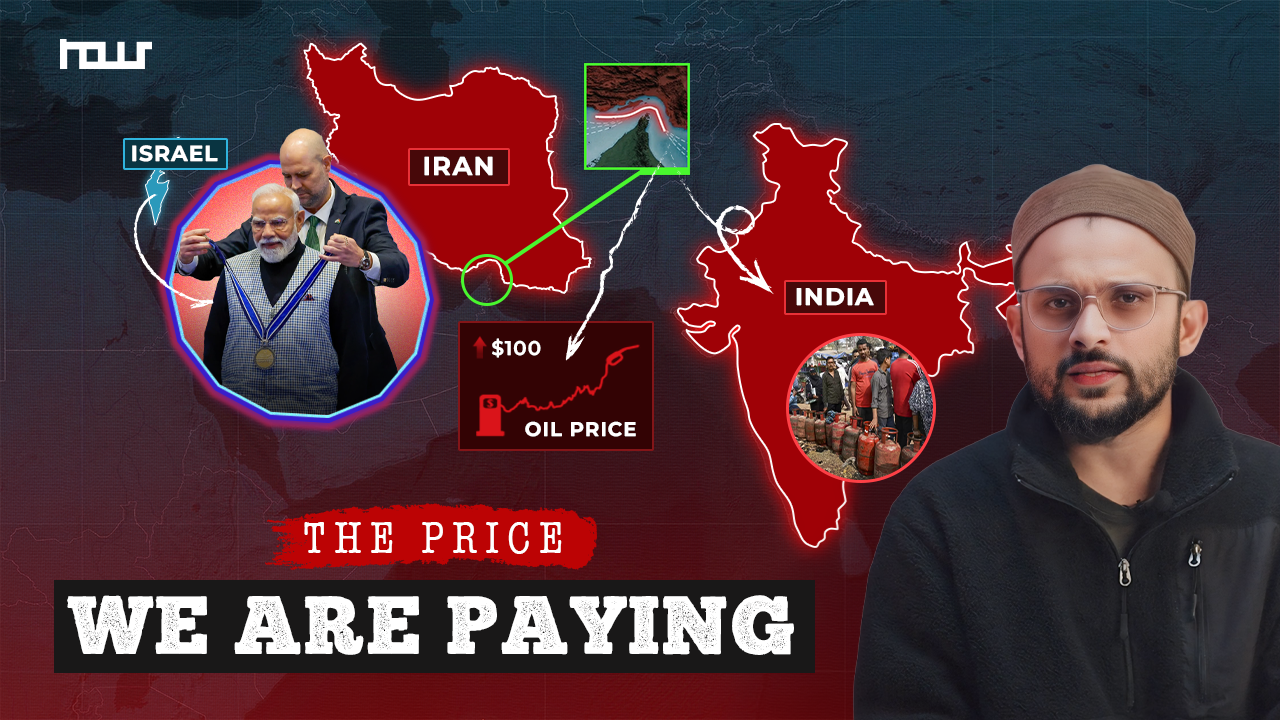
For over a decade, India has projected the image of a rising “Vishwaguru”—a nation claiming a larger moral and geopolitical role in the world. But the turbulence of 2026 has begun to test that narrative. As global conflicts disrupt oil supplies and domestic prices rise, geopolitics is no longer a distant debate—it is shaping everyday life in India.
This explainer examines the evolving direction of India’s foreign policy. From the legacy of Jawaharlal Nehru’s Non-Aligned diplomacy to the current government under Narendra Modi, India historically tried to maintain careful balance across competing global powers—from the United States and Russia to Iran and Israel.
However, recent developments in West Asia, shifting regional alliances, and growing Chinese influence in South Asia have raised questions about whether that equilibrium is eroding. Is India still practising strategic autonomy, or has foreign policy become increasingly shaped by ideological signalling and domestic political narratives?
India’s Foreign Policy at a Crossroads: Between Strategic Autonomy and Shifting Alignments
Rethinking the “Vishwaguru” Narrative in a Changing Global Order
In recent years, India has increasingly projected itself as a rising global power—often framed through the idea of “Vishwaguru,” a nation poised to offer moral, civilizational, and geopolitical leadership to the world. This narrative has resonated strongly in domestic discourse, symbolising confidence, ambition, and a reassertion of India’s place in global affairs.
However, the geopolitical turbulence of 2026 has begun to test this vision in tangible ways. As conflicts in West Asia disrupt global energy flows and economic pressures translate into rising fuel and commodity prices at home, foreign policy is no longer an abstract domain of elite diplomacy. It is directly shaping everyday life for millions of citizens.
This moment invites a deeper question: Is India’s foreign policy still anchored in strategic autonomy, or is it undergoing a more complex transformation shaped by new alignments, domestic politics, and shifting global realities?
The Legacy of Balance: From Non-Alignment to Strategic Autonomy
India’s foreign policy tradition has historically been defined by balance.
Under Jawaharlal Nehru, India emerged as a leading voice in the Non-Aligned Movement, refusing to formally align with either the United States or the Soviet Union during the Cold War. This approach was not neutrality in the passive sense, but rather an active assertion of independence—allowing India to engage with competing power blocs without becoming dependent on any single one.
Subsequent governments, from Indira Gandhi to Manmohan Singh, adapted this principle to changing circumstances. Whether navigating relations between Iran and Israel, or maintaining defence ties with Russia alongside growing engagement with the United States, India’s diplomacy consistently sought flexibility over rigidity.
This approach came to be known as strategic autonomy—the ability to make decisions based on national interest rather than alliance obligations.
A Changing Global Context
The international system in which this policy evolved has itself undergone profound transformation.
The post–Cold War era, marked by American dominance, is gradually giving way to a more diffused distribution of power. China’s economic rise, Russia’s strategic assertiveness, and the emergence of multilateral platforms such as BRICS have introduced new dynamics into global politics.
At the same time, regional conflicts—particularly in West Asia—have become more interconnected with global supply chains, energy markets, and security concerns.
In such a context, maintaining strategic autonomy becomes more complex. It requires not only balancing great powers, but also navigating overlapping crises, economic dependencies, and domestic expectations.
West Asia and the Test of Balance
Nowhere is this complexity more visible than in West Asia.
For decades, India maintained carefully calibrated relationships across the region. It supported Palestinian statehood while developing strong defence and technological ties with Israel. It engaged Iran as a key partner in energy security and regional connectivity, while simultaneously deepening strategic cooperation with Gulf monarchies.
This multi-vector engagement allowed India to protect diverse interests—energy imports, diaspora welfare, trade routes, and geopolitical influence.
Recent developments, however, have placed this balancing act under strain.
Escalating tensions involving Iran, Israel, and the United States have forced countries to take clearer positions, even when their interests remain multidimensional. In such situations, the margin for diplomatic ambiguity narrows, and policy choices become more visible—and more consequential.
Energy Security and Economic Interdependence
One of the most immediate impacts of geopolitical instability is felt through energy markets.
India remains heavily dependent on imported crude oil, a significant portion of which passes through the Strait of Hormuz—a critical chokepoint in global energy supply. Any disruption in this region has direct implications for domestic fuel prices, inflation, and economic stability.
The events of 2026 have reinforced a longstanding reality: foreign policy decisions are inseparable from economic outcomes.
Energy security, currency stability, and trade flows are deeply tied to geopolitical positioning. In a globalised economy, even distant conflicts can shape domestic economic conditions.
The Challenge of Multi-Alignment
In recent years, India’s foreign policy has often been described as moving from non-alignment to multi-alignment—engaging multiple power centres simultaneously.
India maintains strong defence ties with Russia, expanding strategic cooperation with the United States, economic engagement with China (despite tensions), and growing partnerships in West Asia.
In principle, this approach reflects continuity with the idea of strategic autonomy. In practice, however, it requires careful calibration.
When global tensions intensify, multi-alignment can become difficult to sustain. Competing partners may expect clearer commitments, and perceived shifts in alignment can affect long-standing relationships.
The key challenge, therefore, is not whether India engages multiple partners, but how consistently and credibly it maintains balance among them.
Neighbourhood Dynamics and Regional Influence
India’s foreign policy is also shaped by developments closer to home.
South Asia remains a region of overlapping political, economic, and strategic interests. India has traditionally played a central role in regional diplomacy, providing economic assistance, development partnerships, and security cooperation.
At the same time, China’s growing presence in the region—through infrastructure investments, trade agreements, and strategic partnerships—has introduced new competition.
Countries such as Nepal, Sri Lanka, Bangladesh, and the Maldives increasingly navigate between multiple external partners, including India and China. This creates a more complex regional environment in which influence is negotiated rather than assumed.
For India, maintaining regional leadership requires sustained engagement, sensitivity to local concerns, and the ability to offer credible alternatives.
The Gulf Factor: Diaspora and Economic Linkages
Another critical dimension of India’s foreign policy lies in its relationship with the Gulf region.
Millions of Indian citizens live and work in countries such as Saudi Arabia, the United Arab Emirates, Qatar, and Kuwait. Their remittances form a significant component of India’s external income, while the region itself remains a major source of energy imports.
This interdependence makes stability in the Gulf not only a strategic concern, but also a social and economic priority.
Any shifts in regional alignments or perceptions of India’s position can have implications for these relationships. Ensuring the safety, dignity, and economic security of the diaspora remains a central pillar of foreign policy.
Perception, Narrative, and Policy
An important aspect of contemporary diplomacy is the role of narrative.
The idea of India as a “Vishwaguru” reflects a broader effort to project confidence and leadership on the global stage. Such narratives can shape international perception, build soft power, and influence domestic political discourse.
However, narratives must be supported by consistent policy outcomes.
Global leadership is not defined solely by rhetoric or symbolism, but by the ability to navigate complex challenges, maintain credibility across partnerships, and respond effectively to crises.
In this sense, the test of any foreign policy lies not in its articulation, but in its execution.
Conclusion: Navigating an Uncertain Future
India stands at a critical juncture in its foreign policy evolution.
The world is moving toward a more contested and multipolar order, where power is distributed across multiple centres and alliances are increasingly fluid. In such an environment, rigid alignments can limit flexibility, while inconsistent positioning can erode credibility.
The challenge for India is to adapt its long-standing principle of strategic autonomy to this new reality—maintaining balance while engaging actively, preserving independence while building partnerships.
Ultimately, foreign policy is not an abstract exercise in global positioning. It is a practical instrument of national interest—shaping economic stability, regional influence, and the everyday lives of citizens.
As global uncertainties deepen, the need for a calibrated, consistent, and forward-looking approach becomes more urgent.
The question is not whether India can play a larger global role. It is whether it can do so while preserving the balance, credibility, and strategic clarity that have historically defined its diplomacy.
Support Independent Media That Matters
Nous is committed to producing bold, research-driven content that challenges dominant narratives and sparks critical thinking. Our work is powered by a small, dedicated team — and by people like you.
If you value independent storytelling and fresh perspectives, consider supporting us.
Contribute monthly or make a one-time donation.
Your support makes this work possible.