Is the Iran War Exposing the Limits of US Power? | Amaresh Misra
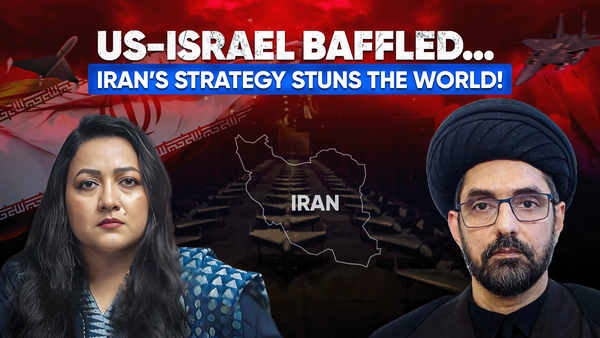
Senior journalist Bushra Khanum speaks with Amaresh Misra on the escalating Iran–Israel–US conflict, examining asymmetric warfare, strain on Western defenses, the strategic importance of the Strait of Hormuz, and how the crisis could reshape global power balances and energy markets.
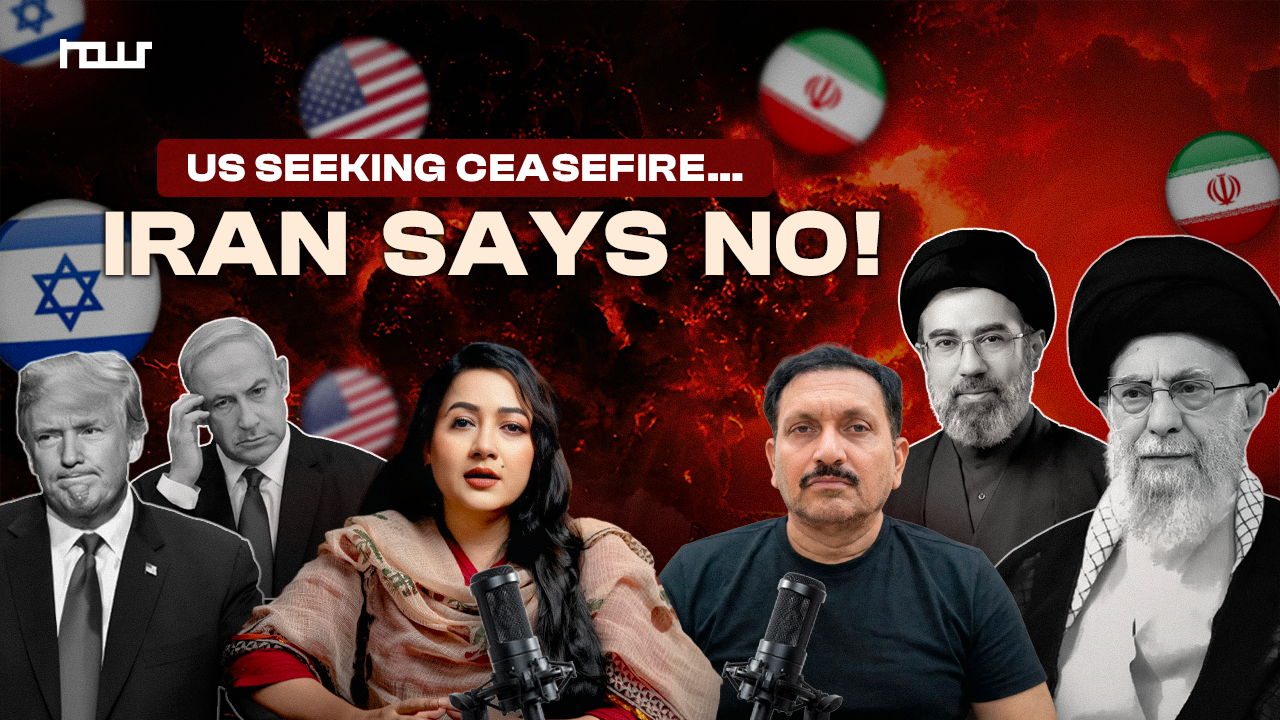
In this episode, senior journalist Bushra Khanum speaks with author and political commentator Amaresh Misra about the rapidly evolving conflict involving Iran, Israel, and the United States, and its wider global implications.
Misra argues that recent developments have exposed significant vulnerabilities in American military power, including depleted air-defense systems and the strain on Western weapons supplies. He also explains how asymmetric warfare, especially the use of low-cost drones and missiles, is transforming modern conflict by allowing smaller powers to challenge technologically superior militaries.
The discussion also examines the rising oil crisis, the strategic importance of the Strait of Hormuz, and the growing geopolitical alignment involving Russia, China, and regional actors. Misra reflects on how the conflict may reshape global power balances and influence future wars.
The conversation also touches on political tensions inside Israel and the broader impact of the war on global markets and security.
Exposing the Limits of Western Power: A Shifting Geopolitical Order in the Middle East
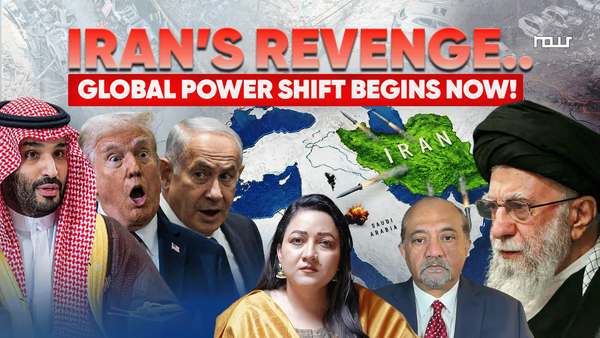
The Middle East has once again become the epicenter of a rapidly evolving geopolitical crisis. What initially appeared to be a targeted military escalation has grown into a complex confrontation involving regional actors, global powers, and competing strategic visions for the future of the region. The developments following the reported assassination of Iran’s top leadership—including Supreme Leader Ali Khamenei—have intensified an already volatile environment, raising fundamental questions about the durability of Western power, the emergence of new alliances, and the changing nature of warfare in the twenty-first century.
In a detailed conversation, West Asia analyst Amaresh Misra and journalist Bushra Khanam Fahad examine these developments and their broader implications. Their discussion situates the current conflict not merely as another episode of regional violence but as a potential turning point in the global balance of power.
The Fragility of Military Superiority
For decades, the military dominance of the United States and its allies has rested on technological superiority. Advanced fighter jets, precision-guided munitions, and sophisticated missile defense systems have been presented as near-impenetrable shields capable of neutralizing most threats.
However, recent confrontations in the region highlight the limitations of this model. Modern warfare increasingly favours asymmetric strategies—methods that exploit vulnerabilities in technologically superior forces through unconventional tactics.
Iran and allied groups have demonstrated how relatively inexpensive technologies—particularly drones and loitering munitions—can challenge highly sophisticated defense systems. Instead of confronting advanced militaries through conventional means, these strategies rely on overwhelming defensive networks with large numbers of low-cost projectiles. The objective is not necessarily to destroy defenses outright but to saturate them, forcing expensive interceptors to be used against cheaper threats.
This shift represents a broader transformation in global military strategy. Conflicts in places such as Ukraine and the Middle East have revealed that the battlefield is no longer dominated solely by high-tech platforms but by the strategic combination of intelligence, cyber capabilities, and mass-produced autonomous systems.
The Economics of Conflict
Beyond the battlefield, the economic consequences of the crisis are already being felt across the world. The Middle East remains the heart of the global energy system, and any disruption in the region inevitably reverberates through international markets.
Energy prices have shown sharp volatility as tensions escalate around the strategically crucial Strait of Hormuz—a narrow maritime corridor through which a significant portion of the world’s oil supply passes. Even the perception of instability in this area can send markets into turmoil.
Higher energy prices affect everything from transportation costs to food production, placing additional pressure on already fragile global economies. For Europe in particular, which has struggled to stabilize its energy supplies after the disruption of Russian gas flows, further instability in the Gulf could deepen economic uncertainty.
Energy geopolitics has long been intertwined with power politics. Control over oil routes, pipelines, and production networks often determines which states possess strategic leverage in times of crisis. As tensions intensify, the struggle for influence over these energy corridors becomes even more critical.
Information, Narrative, and the Fog of War
One of the defining features of contemporary conflicts is the battle over information. Governments, media outlets, and digital networks all play a role in shaping how wars are perceived by domestic and international audiences.
In highly sensitive conflicts, information often becomes tightly controlled. Access for journalists may be restricted, casualty figures disputed, and competing narratives promoted by different sides. The result is a complex “fog of war” in which verifying facts becomes increasingly difficult.
This information contest is not merely about propaganda. Public perception can directly influence political decisions, diplomatic negotiations, and military strategies. Governments must manage domestic opinion while also maintaining international legitimacy—two objectives that can sometimes pull in opposite directions.
Leadership Transitions and Strategic Uncertainty
The assassination of a major political leader inevitably creates uncertainty within any political system. Leadership transitions are especially significant in states where authority is concentrated in key institutions.
In Iran, the political system combines religious authority with republican institutions, meaning that changes at the top can have wide-ranging implications for domestic governance and foreign policy. Discussions surrounding the possible succession of figures such as Mojtaba Khamenei illustrate how leadership transitions can shape the strategic direction of a state.
One area of particular concern among international observers is nuclear policy. Iran’s nuclear program has long been a central issue in global diplomacy, particularly since the negotiations that led to the Joint Comprehensive Plan of Action. Any shift in leadership inevitably raises questions about whether existing policies will continue or change under new circumstances.
The Emergence of a Multipolar Middle East
Perhaps the most significant development emerging from the crisis is the growing influence of external powers beyond the traditional Western alliance. Countries such as Vladimir Putin’s Russia and Xi Jinping’s China are increasingly active in Middle Eastern diplomacy and strategic partnerships.
Rather than direct military involvement, these powers often provide political support, intelligence cooperation, economic engagement, and technological assistance. Their involvement reflects a broader shift toward a multipolar international order—one in which power is distributed among several major actors rather than concentrated in a single global hegemon.
For many states in the region, this diversification of partnerships provides greater diplomatic flexibility. Countries can engage with multiple powers simultaneously, balancing their relationships rather than aligning exclusively with one bloc.
Regional Actors and the Expanding Theatre of Conflict
The Middle East is not defined by a single conflict but by an intricate web of alliances, rivalries, and ideological movements. Groups such as Hezbollah in Lebanon and the Houthis in Yemen have become important actors in regional dynamics.
These movements operate within complex political environments where domestic grievances, regional rivalries, and global geopolitics intersect. Their involvement in conflicts often transforms localized confrontations into wider regional crises.
The possibility of escalation across multiple fronts—Lebanon, the Gulf, the Red Sea, and beyond—creates a strategic dilemma for all sides involved. A limited conflict can quickly expand into a broader regional confrontation if miscalculations occur.
The Limits of Military Solutions
Despite the intensity of modern warfare, history repeatedly demonstrates that military victories rarely produce lasting political stability. Even the most powerful armies struggle to achieve long-term strategic goals if underlying political conflicts remain unresolved.
The Middle East offers many examples of this pattern. From the invasion of Iraq to the prolonged war in Afghanistan, military interventions often generate unintended consequences that reshape the political landscape in unpredictable ways.
This reality raises an uncomfortable question for policymakers: can force alone determine the future of the region? Or does lasting stability require diplomatic frameworks capable of addressing deeper political grievances?
A Region at a Crossroads
The current crisis represents more than a confrontation between rival states. It reflects a broader transformation in the international system—one marked by technological change, economic interdependence, and shifting alliances.
The Middle East stands at the centre of this transformation. Energy resources, strategic geography, and ideological conflicts ensure that the region remains deeply connected to global politics.
Whether the coming years lead to greater confrontation or renewed diplomacy will depend on the decisions of leaders across the world. What is certain, however, is that the assumptions that shaped global politics for decades—particularly the idea of uncontested Western dominance—are increasingly being questioned.
The unfolding events suggest that the world may be entering a new geopolitical era, one in which power is more contested, alliances more fluid, and the consequences of conflict more far-reaching than ever before.
Support Independent Media That Matters
Nous is committed to producing bold, research-driven content that challenges dominant narratives and sparks critical thinking. Our work is powered by a small, dedicated team — and by people like you.
If you value independent storytelling and fresh perspectives, consider supporting us.
Contribute monthly or make a one-time donation.
Your support makes this work possible.