Iran’s revolution showed that faith can challenge Western systems of exploitation I Dr. Javed Jamil
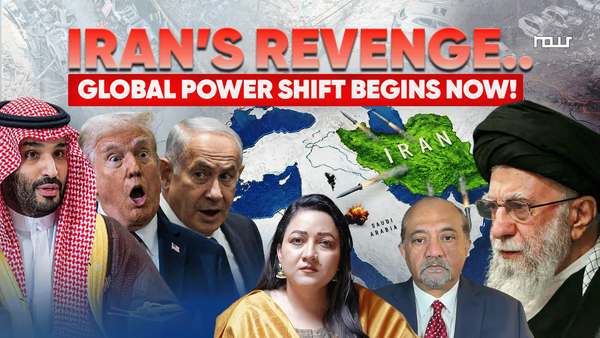
In this podcast, Ali Javed speaks with Dr. Javed Jamil on the legacy of Iran’s 1979 Revolution, its challenge to Western power structures, and the resilience of the Islamic Republic amid sanctions, regional tensions, and debates over regime change.


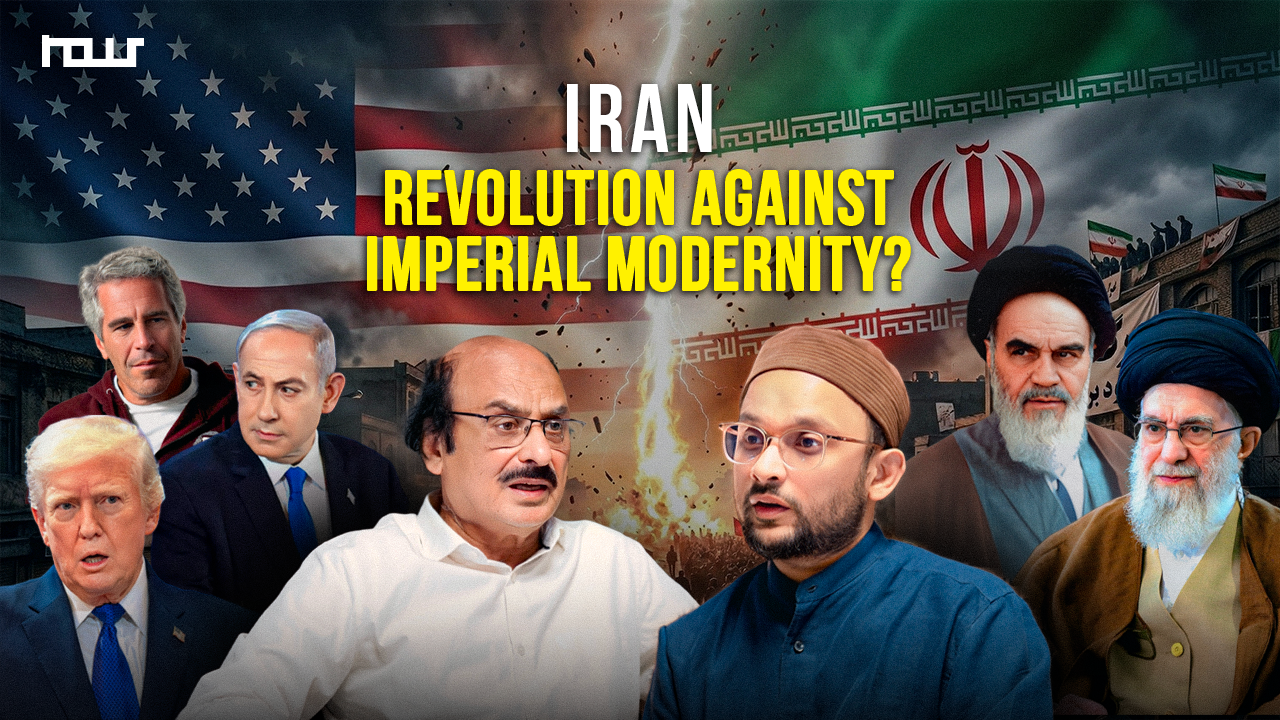
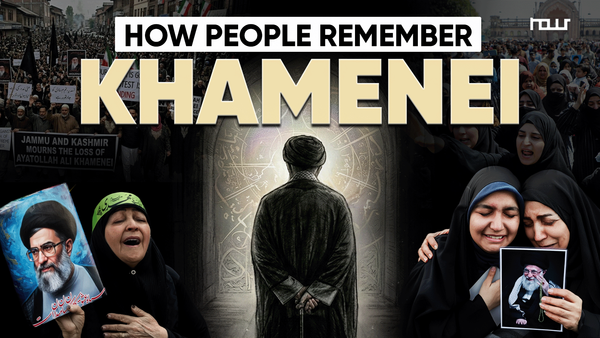
Iran’s 1979 revolution challenged Western systems of power and inspired alternative models such as Islamic economics in parts of the Muslim world. Despite decades of sanctions, pressure and regional conflicts, Iran continues to be seen by many as a symbol of anti-colonial and anti-imperial resistance.
But how resilient is the Iranian system today? Is regime change a realistic possibility?
Deconstructing Power, Faith, and Geopolitics: Rethinking Western Hegemony and the Iranian Experience
In a wide-ranging conversation, Dr. Javed Jamil reflects on Western imperial power, the moral claims of modern liberalism, and the enduring political meaning of the 1979 Iranian Revolution. The discussion is not merely about Iran; it is about competing worldviews—about how power justifies itself, how resistance legitimizes itself, and how faith intersects with geopolitics in a deeply fractured global order.
This article builds on the themes raised in that conversation while situating them within broader historical and political contexts.
Western Power and the Architecture of Moral Authority
For over a century, Western powers—particularly the United States—have shaped the global political and economic order. Institutions governing trade, finance, security, and even human rights discourse have largely evolved under Western leadership. The language of democracy, women’s rights, freedom of speech, and rule of law has become central to this global architecture.
Dr. Jamil challenges the consistency of this moral vocabulary. He argues that Western powers often present themselves as custodians of universal values while simultaneously engaging in military interventions, regime-change operations, economic sanctions, and strategic alliances that undermine those very principles. From colonial violence in Asia and Africa to Cold War interventions and contemporary Middle Eastern wars, he sees a pattern: moral rhetoric paired with geopolitical realism.
This critique resonates with longstanding academic debates. Scholars of postcolonial studies and international relations have pointed out that liberal internationalism frequently coexists with hard power politics. The gap between normative commitments and strategic behavior—particularly in conflicts such as Iraq, Afghanistan, and Gaza—has deepened skepticism across the Global South.
Yet, it is equally important to recognize that Western societies are not monolithic. Within them exist powerful movements for accountability, human rights advocacy, investigative journalism, and institutional reform. The tension between ideals and actions is not unique to the West; it is a feature of all great powers. The question is not whether hypocrisy exists—it does—but how it is institutionalized, challenged, and corrected.
“Economic Fundamentalism” and the Moral Limits of Capitalism
A key concept advanced in the discussion is what Dr. Jamil terms “Economic Fundamentalism.” By this, he refers to a system in which profit maximization becomes the supreme organizing principle of society. In such a framework, technological innovation, media, and even cultural narratives may become instruments of commodification.
Critics of neoliberal capitalism have similarly argued that unregulated markets can distort social priorities—turning education, healthcare, and even human relationships into transactional domains. From widening income inequality to the influence of corporate lobbying in democratic systems, the moral tension within advanced capitalist societies is well documented.
However, the debate is not capitalism versus morality in simplistic terms. Many countries with market economies also maintain strong welfare systems, labor protections, and public institutions designed to mitigate exploitation. The deeper issue lies in regulatory balance: how societies prevent economic efficiency from eclipsing ethical responsibility.
Dr. Jamil’s intervention situates this debate within a civilizational frame. He suggests that societies rooted in religious moral systems may be better equipped to restrain excess. Whether this claim holds universally is contested, but it underscores a broader global search for ethical anchors in an era of financialization and digital hyper-consumerism.
The 1979 Iranian Revolution: Resistance as Ideology
The Iranian Revolution of 1979 marked one of the most consequential political transformations of the late twentieth century. It overthrew a Western-backed monarchy and replaced it with an Islamic Republic grounded in clerical authority and constitutional structures.
Dr. Jamil interprets the revolution as more than a domestic upheaval; he frames it as a civilizational counter-model—an assertion that governance could be anchored in religious morality rather than secular liberalism. In his view, Iran’s political structure represents a form of “theo-democracy,” combining elected institutions with religious oversight.
From a political science perspective, Iran’s system is hybrid. It includes competitive elections for president and parliament, alongside unelected bodies such as the Guardian Council and the Supreme Leader, who wield substantial authority. Supporters argue that this structure preserves ideological coherence and moral accountability. Critics contend that it limits pluralism and concentrates power in clerical institutions.
What is undeniable is that the revolution reshaped regional geopolitics. It inspired Islamic movements, alarmed Western governments, and triggered decades of sanctions, proxy conflicts, and diplomatic standoffs. It also redefined Iran’s identity—from a monarchy aligned closely with Washington to a republic positioning itself as a voice of anti-imperial resistance.
Sectarian Politics and the Question of Unity
Another significant theme in the discussion is Shia-Sunni unity. Historically, sectarian divisions have been manipulated by regional and global actors seeking influence in the Middle East. The Iranian leadership has consistently described its revolution as Islamic rather than sectarian, and Tehran has supported Sunni groups such as Hamas in Palestine as part of a broader anti-Israel posture.
At the same time, sectarian tensions remain a defining feature of Middle Eastern geopolitics. Conflicts in Iraq, Syria, Lebanon, and Yemen demonstrate how identity, power, and foreign intervention intersect in complex ways. Iran’s regional role is interpreted differently depending on vantage point: some view it as a stabilizing axis of resistance; others see it as an expansionist actor pursuing strategic depth.
The reality likely lies somewhere between narrative extremes. Regional alliances are rarely ideological alone; they are shaped by security dilemmas, historical grievances, and shifting balances of power.
Arab Monarchies, Strategic Alliances, and Political Stability
Dr. Jamil also critiques Gulf monarchies for aligning closely with Western powers and hosting foreign military bases. These states have leveraged oil wealth to maintain domestic stability and global partnerships. Their strategic calculus often prioritizes regime security, economic diversification, and international investment.
While critics argue that such alignments enable external dominance in the region, defenders maintain that smaller states must navigate survival within a competitive geopolitical environment. Security partnerships, from their perspective, are pragmatic rather than ideological.
The divergence between Iran’s revolutionary posture and Gulf monarchies’ pragmatic diplomacy highlights a broader regional debate: whether sovereignty is better defended through confrontation or through strategic accommodation.
Institutional Resilience and Leadership Transitions
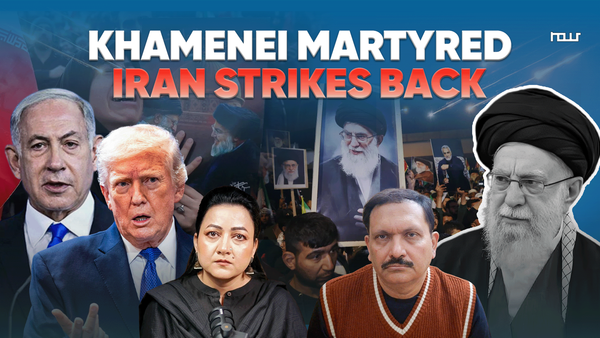
The conversation also addresses targeted assassinations and leadership decapitation strategies. Modern conflicts increasingly involve attempts to destabilize systems by eliminating key figures. Iran’s institutional design—featuring councils and layered authority—was intended to ensure continuity beyond individual personalities.
Political systems rooted in ideology often develop mechanisms of succession precisely to avoid collapse upon leadership loss. Whether such resilience strengthens governance or entrenches rigidity depends on evolving domestic dynamics and public legitimacy.
Beyond Binaries: The Global Implications
The broader geopolitical context cannot be ignored. The Middle East today is shaped not only by US-Iran tensions but also by China’s economic expansion, Russia’s regional involvement, and shifting energy markets. The global order itself is in flux, with multipolarity gradually replacing unipolar dominance.
In this environment, ideological narratives—whether of liberal democracy, political Islam, or nationalist sovereignty—compete for legitimacy. The Iranian model appeals to some as a symbol of defiance; to others, it represents constraints on political freedoms. Western liberalism, once ascendant and unchallenged, now faces its own crises of inequality, polarization, and credibility.
Faith, Power, and the Future
At its core, the discussion with Dr. Javed Jamil invites reflection on a deeper question: Can faith-based political systems offer a morally coherent alternative to secular modernity? Or must modern governance inevitably blend religious ethics with institutional pluralism and global interdependence?
There is no simple answer. What is clear, however, is that global politics is no longer framed solely in terms of East versus West, or secular versus religious. It is shaped by overlapping crises—economic inequality, technological disruption, climate change, identity politics, and contested sovereignty.
The Iranian Revolution remains a pivotal reference point in this debate. For supporters, it embodies resistance against imperial dominance. For critics, it illustrates the tensions inherent in merging religious authority with state power. For scholars, it offers a case study in how ideology can restructure a nation and influence a region for decades.
As geopolitical rivalries intensify, the conversation must move beyond caricatures. Serious engagement requires acknowledging both the ethical critiques of Western power and the internal complexities of alternative models. Only then can discourse shift from polemic to understanding.
The Middle East’s future—and perhaps the future of global order—will depend not only on military strength or economic leverage, but on which narratives of justice, governance, and human dignity ultimately command lasting legitimacy.
Support Independent Media That Matters
Nous is committed to producing bold, research-driven content that challenges dominant narratives and sparks critical thinking. Our work is powered by a small, dedicated team — and by people like you.
If you value independent storytelling and fresh perspectives, consider supporting us.
Contribute monthly or make a one-time donation.
Your support makes this work possible.