Iran Has Been Preparing for This War for 47 Years | Syed Akif Zaidi
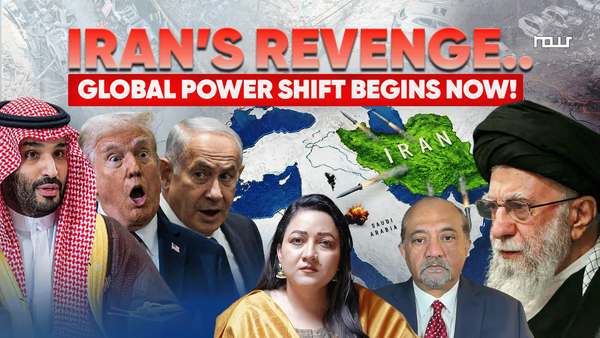
Bushra Khanum speaks with Qom-based researcher Syed Akif Zaidi on Iran’s preparedness and resilience in its confrontation with Israel and the United States. The discussion explores strategic and ideological dimensions of the war and its implications for the emerging global order.
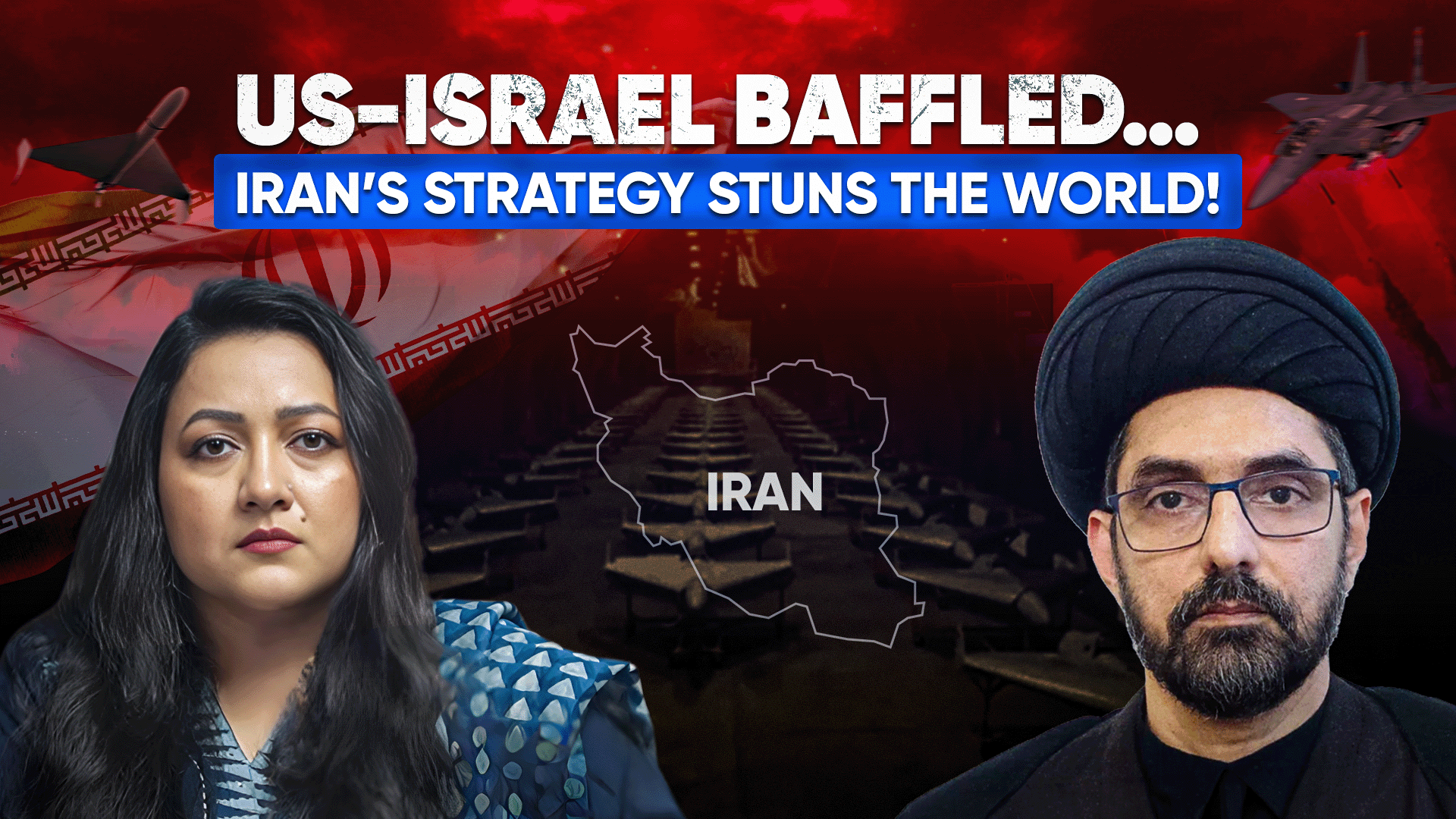
Can Iran win this war? Was Iran prepared for such a confrontation? What strategic, political, and ideological factors give it an edge against Israel and the US? How resilient is the Iranian system, and have we entered a broader civilizational clash between Western and Islamic blocs?
In this podcast, senior journalist Bushra Khanum speaks with research scholar at Qom, Iran Syed Akif Zaidi to unpack the strategic, ideological, and geopolitical implications of the war. The conversation also assesses whether the current conflict could mark a decisive turning point in the emerging global order.
The Shifting Tides of West Asia: Iran’s Long Strategic Preparation and the Emerging Regional Order
The geopolitical landscape of West Asia is entering one of its most volatile and consequential moments in decades. What appears today as an escalating military confrontation between Iran and the US–Israel axis is not merely a sudden crisis. Rather, it reflects deeper historical tensions, long-term strategic planning, and competing visions of regional order that have been developing for nearly half a century.
In a recent discussion hosted by senior journalist Bushra Khanum, West Asia researcher Syed Akif Zaidi, speaking from the Iranian city of Qom, offered an on-the-ground perspective on the unfolding situation. His analysis situates the current confrontation within a much longer historical arc beginning with the 1979 Iranian Revolution, which fundamentally altered the political trajectory of the region.
According to Zaidi, the present conflict cannot be understood as an isolated war. Instead, it represents the culmination of decades of geopolitical rivalry, ideological contestation, and strategic preparation. Whether or not one agrees with his framing, the conversation highlights an important question: are we witnessing a temporary escalation, or the early stages of a deeper transformation in the global balance of power?
The Legacy of the 1979 Revolution
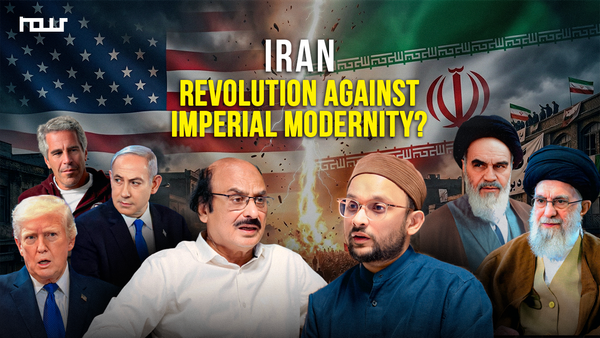
The Islamic Revolution of 1979 was one of the most significant political events of the late twentieth century. By overthrowing a Western-backed monarchy and establishing a new political order grounded in Islamic governance, Iran repositioned itself as a central actor challenging the existing regional and international structure.
For the leadership that emerged after the revolution, confrontation with external powers—particularly the United States and Israel—was often seen as inevitable. This perception shaped the strategic thinking of the Iranian state over the decades that followed.
From Iran’s perspective, building long-term resilience required preparation across multiple domains: military capability, ideological cohesion, economic endurance under sanctions, and institutional stability. The result has been the gradual development of what analysts often describe as asymmetric deterrence—a strategy designed not to compete directly with global military powers but to make intervention prohibitively costly.
One of the most widely discussed aspects of this strategy is Iran’s development of extensive missile infrastructure, including underground facilities often referred to in media reports as “missile cities.” These fortified networks are intended to ensure survivability even under heavy bombardment and allow continued operations in the event of conflict.
While the precise scale and capability of such infrastructure remain difficult to independently verify, the broader point is clear: Iran has invested heavily in preparing for a prolonged confrontation rather than a short war.
War, Loss, and Public Mobilization
The current phase of the conflict has been marked by intense violence and human loss. Reports of attacks on Iranian cities and military installations, along with retaliatory operations, illustrate the growing intensity of the confrontation.
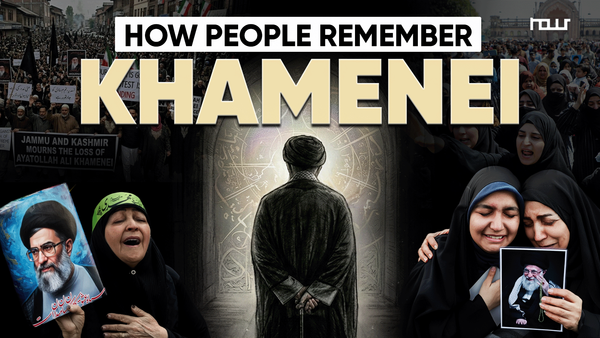
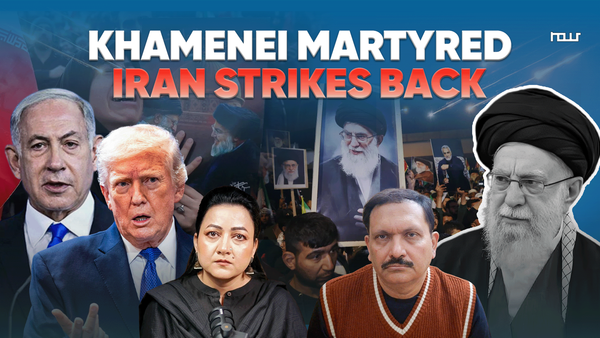
In the discussion, Zaidi described how the assassination of senior Iranian leadership—including the country’s Supreme Leader—deeply shocked the population. Yet he also argued that the attacks have generated widespread mobilization rather than societal collapse.
According to his account, large public gatherings have taken place across multiple cities, with citizens expressing solidarity with the state and with one another. Whether these demonstrations represent genuine popular consensus or a mixture of patriotism, grief, and political messaging is a question that observers continue to debate.
History suggests that external military pressure often produces rally-around-the-flag effects, strengthening internal cohesion at least in the short term. Similar dynamics have appeared in many societies under wartime conditions, regardless of their political systems.
A Conflict of Power Structures
Many commentators attempt to frame the current confrontation through simplified labels: a regional war, a sectarian conflict, or a geopolitical proxy battle. However, Zaidi proposes a broader interpretation, describing the confrontation as a clash between competing political paradigms.
From this perspective, one side represents the continuation of a Western-led international order that has shaped the region since the end of colonial rule. The other represents movements that seek greater political autonomy and regional self-determination.
Such interpretations are not universally accepted. Critics argue that geopolitical conflicts are rarely reducible to moral binaries and often involve complex combinations of strategic interests, domestic politics, and historical grievances.
Nevertheless, it is undeniable that narratives of resistance, sovereignty, and anti-imperialism have played a powerful role in shaping political discourse across parts of the Middle East and the broader Muslim world. Iran has consistently positioned itself within that narrative framework.
Institutional Resilience and Political Structure
Another key theme raised in the discussion concerns the durability of Iran’s political system.
Western analyses often portray the Islamic Republic primarily through the lens of centralized authority. Yet Iran’s political structure also includes a network of institutions: elected bodies such as the parliament and presidency, religious oversight institutions, military organizations, and bureaucratic structures that manage governance.
This hybrid system—part republican, part theocratic—has proven more resilient than many external observers predicted. Over the past four decades it has survived war, economic sanctions, political protests, and international isolation.
Even major leadership transitions have not necessarily destabilized the system. Instead, institutional mechanisms have typically ensured continuity of governance.
Whether this resilience will persist under the pressure of an expanding regional conflict remains an open question. But the endurance of the system thus far suggests that predictions of rapid collapse may underestimate the depth of its institutional foundations.
Expanding Geopolitical Arenas
Another dimension of the conflict concerns its widening geographical scope.
Events occurring far beyond the immediate Middle Eastern theater—including incidents involving maritime routes in the Indian Ocean—suggest that the strategic arena may be expanding. Modern conflicts increasingly unfold across multiple domains: naval routes, cyber networks, economic sanctions, and proxy actors operating in different regions.
Such developments highlight the interconnected nature of global geopolitics. Energy supply routes, trade corridors, and security alliances ensure that instability in West Asia quickly reverberates far beyond the region itself.
For countries like India, which maintain economic and diplomatic relationships across the Middle East, these shifts present difficult policy challenges. Balancing energy security, strategic partnerships, and regional diplomacy requires careful navigation in an increasingly polarized environment.
Some observers argue that India’s foreign policy has become more pragmatic and economically driven since the 1990s. Others believe that this pragmatism has come at the expense of the moral leadership associated with its earlier non-aligned stance.
The debate reflects broader tensions between values-based diplomacy and strategic realism, a dilemma faced by many mid-sized powers in today’s international system.
The Strategic Objectives Behind the Conflict
Behind the immediate military engagements lies a deeper strategic contest over the future of West Asia.
Iran and its allied networks often articulate their long-term objective as reducing or eliminating foreign military presence in the region and supporting Palestinian self-determination.
The United States and its regional allies, on the other hand, emphasize security guarantees, deterrence against adversarial states, and the protection of existing alliances.
These competing visions represent fundamentally different models of regional order. One prioritizes security architecture centered around long-standing Western alliances. The other emphasizes regional autonomy and resistance to external dominance.
The outcome of this struggle—whether through military confrontation, diplomatic negotiation, or prolonged stalemate—will likely shape the geopolitical landscape of West Asia for decades.
The Broader Historical Context
It is important to recognize that the Middle East has long been a focal point of global geopolitical competition.
From the colonial rivalries of the nineteenth century to the Cold War and the post-9/11 era, external powers have repeatedly intervened in the region due to its strategic location and energy resources.
Today’s conflicts therefore cannot be separated from this historical legacy. Many contemporary narratives—whether nationalist, religious, or ideological—are rooted in memories of colonial domination and struggles for sovereignty.
At the same time, the region’s internal dynamics are equally significant. Ethnic diversity, sectarian differences, economic inequalities, and domestic political rivalries all shape the trajectory of conflicts.
Understanding the current moment requires acknowledging both dimensions: external geopolitical competition and internal regional complexity.
A Region at a Crossroads
West Asia now stands at a critical crossroads.
If the current confrontation continues to escalate, it could lead to prolonged instability affecting global energy markets, international trade routes, and diplomatic alliances.
Alternatively, the intensity of the conflict might eventually push regional and global actors toward renewed negotiations and attempts at political settlement.
History suggests that even the most entrenched geopolitical rivalries eventually produce diplomatic openings. Yet the path toward such outcomes is rarely straightforward and often comes only after periods of significant upheaval.
Conclusion: Beyond Immediate Headlines
The current conflict surrounding Iran is more than a military crisis. It reflects deeper structural tensions within the international system—questions about sovereignty, power distribution, and the future shape of global order.
Whether one views Iran as a strategic challenger, a regional power defending its autonomy, or something in between, the reality is that the Middle East is undergoing profound transformation.
As political alliances shift and new strategic calculations emerge, the region’s future will depend not only on military outcomes but also on diplomacy, economic resilience, and the ability of societies to navigate change.
What is certain is that the consequences of today’s decisions will reverberate far beyond West Asia. They will influence the global balance of power, reshape regional alliances, and define the geopolitical landscape of the twenty-first century.
Support Independent Media That Matters
Nous is committed to producing bold, research-driven content that challenges dominant narratives and sparks critical thinking. Our work is powered by a small, dedicated team — and by people like you.
If you value independent storytelling and fresh perspectives, consider supporting us.
Contribute monthly or make a one-time donation.
Your support makes this work possible.