Six Years of Silence: Recollecting the Horror of December 15 at Jamia Millia Islamia
"They were beating to kill." Six years after the police crackdown at Jamia Millia Islamia, survivors recount the trauma of December 15. From the library assault to the lingering silence on campus, this is the story of a "black day" and the elusive wait for justice.

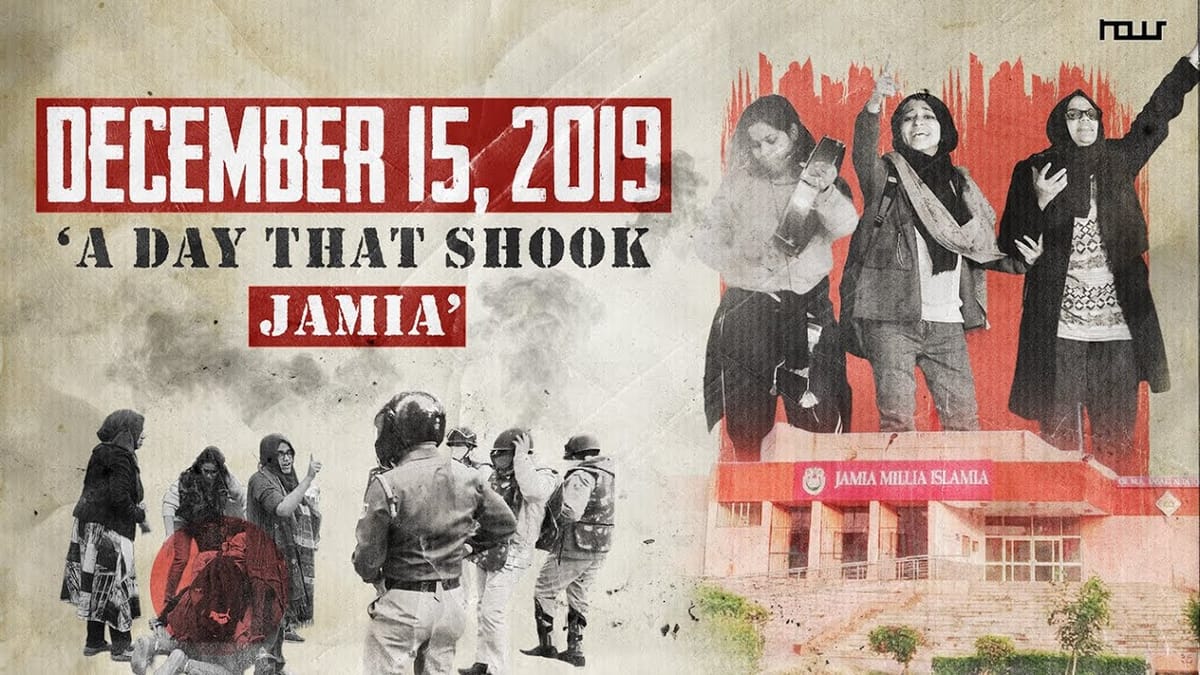
It has been six years since December 15, 2019, a date that students of Jamia Millia Islamia describe as a "black day" etched permanently into their lives. On the sixth anniversary of the police crackdown inside the university campus, survivors and eyewitnesses recounted the harrowing events of that night—a night where the sanctity of a university library was breached, and the sounds of pages turning were replaced by the thuds of lathis and the shattering of glass.
"They Were Beating to Kill"
For many students present on campus that Sunday evening, what began as a protest against the Citizenship Amendment Act (CAA) spiraled into a fight for survival. Recalling the intensity of the police action, one survivor noted that the aggression seemed to go beyond crowd control. "They weren't beating us just to hurt us; they were beating us with the intent to kill," he said, describing the sheer brutality unleashed upon unarmed students.
The violence resulted in life-altering injuries. Eyewitnesses described seeing peers with cracked heads, broken arms, and fractured legs. One student narrated a chilling account of being trapped on the first floor of the library. When he tried to escape, a police baton struck him directly in the eye. "I fell down, but they didn't stop. They kept beating me and every other student left there," he recalled. He spent the next half-hour hiding in a washroom, pressing a white handkerchief to his bleeding eye until the cloth turned completely red.
The Violation of Safe Spaces
The video report highlights a systematic dismantling of safe spaces within the university. Students seeking refuge in the library and washrooms were not spared. Footage and testimonies reveal that police allegedly vandalized CCTV cameras before launching their assault, a move students believe was an attempt to destroy evidence.
"The violence inside the campus was ten times worse than what was seen on the streets because there was nobody to record it inside," a student explained. Another recounted the terror of the police breaking down library doors and "blindly" raining lathis on students without asking a single question.
A Haunting Reminder of the Past
For some, the visuals of students being marched out of the library with their hands raised evoked darker historical memories. One speaker compared the scene to the 1987 Hashimpura massacre, where men were rounded up by security forces. "That photo... it describes the mentality of the authorities who entered the college," he remarked, emphasizing that the image of students with hands in the air was less about the library and more about the power dynamic and humiliation inflicted upon them.
The Long Road to Nowhere
Six years later, the physical wounds may have healed for some, but the pursuit of justice remains at a standstill. Students expressed deep disillusionment with the judicial process. Despite medical reports and CCTV footage serving as evidence, and an official admission that students were not at fault, there has been little accountability. "Filing an FIR became a crime. Investigation is being done by the same police force that committed the brutality. How can we expect justice?" questioned a survivor.
The atmosphere on campus has shifted from one of vibrant resistance to palpable fear. "The campus feels dead. People are afraid to even talk about it now," one student observed, noting that the university is now gripped by a lingering silence and paranoia about surveillance.
A "Historic" Trauma
While the anti-CAA protests that followed December 15 are often celebrated as a historic movement of democratic resilience, for the victims, the day remains primarily a source of trauma. "It is a very traumatic thing that happened in my life," shared a student, acknowledging the duality of the event—as both a spark for nationwide inspiration and a personal tragedy for those who bled that night.
As Jamia Millia Islamia marks another year since that fateful night, the scars—both on the bodies of the students and the psyche of the institution—remain visible, a testament to the "televisation of violence" that has, in the words of one student, "become the norm".
Support Independent Media That Matters
Nous is committed to producing bold, research-driven content that challenges dominant narratives and sparks critical thinking. Our work is powered by a small, dedicated team — and by people like you.
If you value independent storytelling and fresh perspectives, consider supporting us.
Contribute monthly or make a one-time donation.
Your support makes this work possible.