Uttam Nagar: When Tragedy Becomes a Political Weapon Against Muslims | Prof. Apoorvanand
This podcast interrogates the Uttam Nagar violence as a test of law, governance, and social cohesion. Drawing on Professor Apoorvanand, it examines how state response, public attitudes, and institutional accountability shape communal relations and the credibility of constitutional order in India.
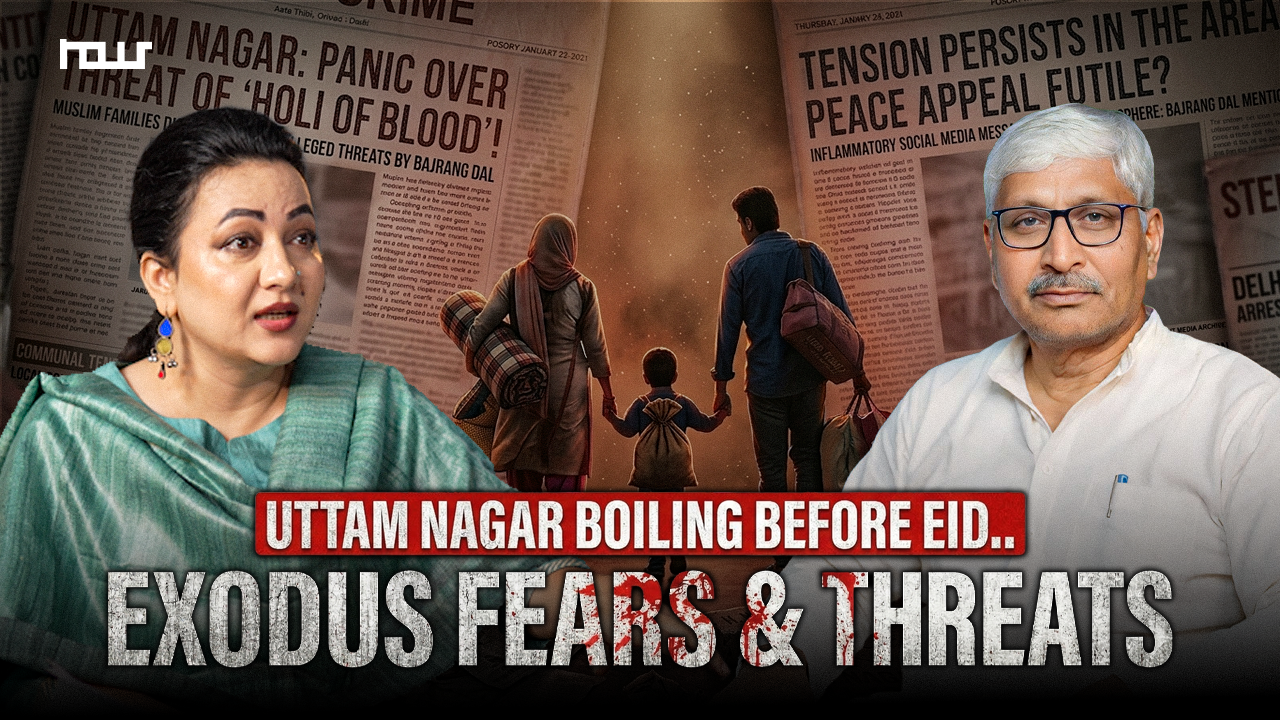
The recent instance of violence in Delhi’s Uttam Nagar, questions the role of law enforcement, and expresses fears about social and political conditions. Though India’s authorities have repeatedly stated their commitment to upholding the Constitution and maintaining law and order for all citizens, issues of communal relations, minority rights, and governance remain subjects of ongoing debate in the country.
Professor Apoorvanand argues that governance and public attitudes play a role in shaping social harmony. Referring to a noted writer of 20th century India, Munshi Premchand, he underlines the perceived gravity of the situation.
There is organized violence under the protection of police. India’s majority wants Muslims minorities to be killed peacefully without raising their hands when they are attacked with swords. State has already show their intention that normal course of action will not be followed in case of Muslims. India’s majoirity has already committed massacres of Sikhs which are said to be the saviour of Hindu religion. Indian bureaucracy and policy does not have courage to fulfil their constitutional duties, so their is urgent need of government change. Indian Muslims are now forced to live under the uncertainty much like the Muslim of Gaza. Munshi Premchand once said that the way Muslims are treated will not last for long and they will not tolerate their disgrace nor they should tolerate it.
From Local Dispute to Public Crisis: Understanding the Uttam Nagar Incident and Its Wider Implications
Law, Media, and the Fragility of Communal Harmony in Urban India
In a densely populated urban landscape like Delhi, everyday disputes—over space, noise, or neighbourhood interactions—are not uncommon. Most remain contained, resolved through local negotiation or routine legal processes. Occasionally, however, an isolated incident acquires a trajectory far beyond its origins, shaped by media narratives, political interventions, and public sentiment.
The recent events in Uttam Nagar represent one such moment. What reportedly began as a local altercation between two families during the festival of Holi escalated into a serious criminal incident, followed by heightened tensions, administrative action, and broader public debate. As the episode unfolded, it raised critical questions about the intersection of law enforcement, public discourse, and communal sensitivity in contemporary India.
The Incident: From Altercation to Tragedy
According to available accounts, the conflict originated in a neighbourhood dispute between two families, reportedly triggered during Holi celebrations. What might have begun as a minor confrontation escalated into a physical clash involving multiple individuals.
Tragically, the altercation resulted in the death of a young man, turning a local dispute into a serious criminal matter requiring investigation under established legal procedures. As with any such case, the primary responsibility lies with law enforcement agencies to determine the sequence of events, establish culpability, and ensure that due process is followed.
It is important to note that incidents of this nature—however tragic—are not uncommon in urban settings. What distinguishes the Uttam Nagar case is not only the violence itself, but the way it subsequently evolved in the public and administrative sphere.
The Expansion of a Local Conflict
In the immediate aftermath, the incident began to attract wider attention. Public reactions, amplified through media coverage and social platforms, gradually reframed the narrative.
Localised conflicts can sometimes be interpreted through broader social or communal lenses, particularly in environments where mistrust already exists. This process of reinterpretation can transform a specific dispute into a symbolic event, representing larger anxieties or tensions.
Such shifts in narrative are rarely neutral. They influence how communities perceive the incident, how authorities respond, and how the situation evolves on the ground.
Administrative Action and the Question of Due Process
One of the most debated aspects of the Uttam Nagar case has been the nature and timing of administrative action taken following the incident.
Authorities reportedly undertook demolition measures against property linked to the accused, citing legal grounds such as encroachment. Actions of this kind have, in recent years, become a subject of intense legal and constitutional scrutiny across India.
The central concern in such cases is the principle of due process. Any punitive or corrective measure—whether demolition or otherwise—must adhere to established legal procedures, including prior notice, opportunity for response, and judicial oversight where applicable.
The Supreme Court of India has, in multiple observations, emphasized that administrative actions cannot substitute for judicial determination of guilt. When punitive measures appear to precede or bypass legal adjudication, they raise fundamental questions about the balance between governance and constitutional safeguards.
Policing, Public Order, and Institutional Responsibility
Another critical dimension of the incident relates to the role of law enforcement in maintaining public order.
In situations where tensions escalate, the responsibility of the police extends beyond investigation. It includes preventing further escalation, ensuring the safety of all residents, and acting impartially in the face of competing pressures.
Urban disturbances often unfold in highly charged environments, where rumours, emotions, and mobilization can rapidly intensify. In such contexts, even perceived inaction or delayed response can influence public trust.
Maintaining credibility requires not only enforcing the law, but doing so in a manner that is visibly fair, proportionate, and consistent.
Media, Messaging, and the Construction of Narrative
The role of media—both traditional and digital—has become central in shaping how such incidents are understood.
Information circulates rapidly, often in fragmented or unverified forms. Competing narratives emerge, each emphasizing different aspects of the event. In this process, nuance is frequently lost.
The framing of an incident can significantly influence public perception. When coverage shifts from factual reporting to interpretative or emotionally charged narratives, it risks amplifying tensions rather than clarifying them.
Responsible journalism, particularly in sensitive situations, requires restraint, verification, and an awareness of the potential consequences of narrative construction.
The Social Impact: Trust, Fear, and Fragmentation
Incidents like the one in Uttam Nagar have effects that extend beyond immediate legal outcomes.
They can deepen existing social divides, reinforce perceptions of insecurity, and alter patterns of everyday interaction within communities. In urban neighbourhoods, where diverse groups live in close proximity, trust is a critical but fragile element.
When that trust is disrupted, the consequences can be long-lasting—manifesting in social distancing, informal segregation, and heightened suspicion.
Rebuilding such trust requires sustained effort, dialogue, and visible commitment to fairness by institutions.
The Role of Political and Civil Society Actors
Moments of tension often test the responsiveness of political leadership and civil society.
Elected representatives, community leaders, and social organizations can play a constructive role in de-escalation—by facilitating dialogue, addressing grievances, and reinforcing the importance of lawful conduct.
Equally, silence or absence in such moments can be interpreted in multiple ways, influencing public perception and confidence.
A functioning democracy relies not only on institutions, but also on active engagement from those entrusted with public responsibility.
Law, Justice, and the Importance of Process
At the heart of the Uttam Nagar incident lies a fundamental principle: the rule of law must prevail over the rule of reaction.
Criminal acts must be investigated thoroughly, and those found responsible must be held accountable through the judicial system. At the same time, the rights of all individuals—including the accused—must be protected until guilt is established through due process.
The legitimacy of the legal system depends not only on outcomes, but on the fairness and transparency of the process itself.
Conclusion: A Moment for Reflection
The Uttam Nagar episode is not merely a local law-and-order issue. It is a reflection of broader challenges facing contemporary urban India—where rapid communication, political polarization, and institutional pressures intersect.
It underscores the need for:
- Adherence to due process in administrative action
- Impartial and proactive law enforcement
- Responsible media practices
- Constructive political engagement
Ultimately, the strength of a democracy is measured not in moments of stability, but in how it responds to moments of tension.
Ensuring that justice is delivered—fairly, transparently, and without prejudice—is essential not only for resolving individual cases, but for preserving the broader social fabric on which democratic life depends.
Support Independent Media That Matters
Nous is committed to producing bold, research-driven content that challenges dominant narratives and sparks critical thinking. Our work is powered by a small, dedicated team — and by people like you.
If you value independent storytelling and fresh perspectives, consider supporting us.
Contribute monthly or make a one-time donation.
Your support makes this work possible.