
The Crisis of Representation: Why Indian Muslims Must Build Their Own Institutions
As media failures and political exclusion deepen, Indian Muslims face an urgent challenge: building independent institutions capable of securing representation, dignity, and democratic agency.
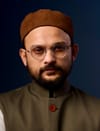
This essay draws on an in-depth panel discussion hosted by Nous featuring senior journalist Bushra Khanum, political editor Aditya Menon, independent journalist Asad Ashraf, and Nous founder Ali Javed. Their conversation explores the crises of media representation, political marginalization, and institution-building confronting Indian Muslims today.
Independent research is a public good. In an era of noise, your support ensures that evidence-based storytelling remains a standard, not an exception.
For a deeper and more comprehensive understanding, readers are encouraged to watch the full discussion from which this article is drawn.
There are moments in the life of a community when the question is no longer simply about discrimination or political setbacks, but about the very architecture through which a people understand themselves and are understood by others. For Indian Muslims, this is one such moment.
Over the past decade, India’s Muslims have experienced an unprecedented process of political marginalization and social othering. Suspicion has become normalized. Stereotypes have become common sense. Public discourse increasingly treats Muslims not as equal citizens participating in the national project but as subjects requiring constant explanation, scrutiny, and justification.
The consequences are visible everywhere. A lynching barely remains in the news cycle for more than a day. Hate speech that once shocked public conscience now passes as routine political rhetoric. Corporate professionals, doctors, journalists, and ordinary street vendors alike increasingly find themselves viewed through the same lens of collective suspicion.
Yet the present crisis cannot be explained solely through the rise of majoritarian politics.
It is also a crisis of representation.
It is a crisis produced by the failures of mainstream media, the limitations of alternative media, the inadequacies of political parties, and the inability of existing institutions to adapt to new realities. More fundamentally, it is a crisis of voice—a struggle over who gets to narrate Muslim experiences, define Muslim aspirations, and imagine Muslim futures.
The central lesson emerging from the Nous discussion is profound:
Indian Muslims can no longer afford to outsource their representation to others. They must build their own institutions, their own narratives, and their own intellectual infrastructure.
“Without research there can be no narrative, without narrative there can be no movement, and without movements rights become difficult to defend.”
The Mainstream Media and the Production of Suspicion
The role of large sections of India’s mainstream media in manufacturing anti-Muslim sentiment is well documented.
For years, television channels and digital platforms have amplified conspiratorial narratives such as “Love Jihad,” “Land Jihad,” and “Thook Jihad,” transforming fringe anxieties into mainstream political discourse.
The cumulative effect has been devastating.
An entire community has been gradually reimagined as an internal threat.
This process has expanded beyond economically marginalized Muslims to include educated professionals and middle-class families. The Muslim doctor, software engineer, entrepreneur, or academic increasingly faces the same suspicion once reserved only for the stereotyped “other.”
Media, in this sense, has ceased to merely reflect prejudice.
It has actively produced it.
“The transformation of Muslims from citizens into permanent subjects of suspicion is one of the defining political developments of contemporary India.”
The Limits of Alternative Media
The failures of mainstream journalism gave rise to a vibrant alternative media ecosystem. Yet the panelists argue that alternative media carries its own limitations.
Most alternative platforms approach Muslims primarily through the language of victimhood.
Human rights reporting is necessary. Documentation of injustice is indispensable. But when an entire community is represented only as a victim, its agency disappears.
The internal churnings of Muslim society remain invisible:
- Emerging leadership
- New intellectual movements
- Grassroots organizing
- Cultural production
- Independent political thinking
The result is a highly restricted gaze.
Muslims appear only when violence occurs.
They disappear when they create, organize, think, and imagine.
Furthermore, editorial leadership in much of alternative media remains concentrated among dominant-caste liberal elites. Consequently, even sympathetic representations frequently emerge through an external lens.
Representation without participation ultimately reproduces hierarchy.
As Asad Ashraf argues, genuine diversity means allowing Muslim journalists not merely to occupy symbolic positions but to shape editorial priorities and report on issues beyond “minority affairs.”
“A community represented only through suffering is denied its capacity to act, create, and lead.”
The Crisis of Political Representation
The crisis of media representation mirrors a deeper political vacuum.
For decades, Muslim political aspirations have largely been mediated through secular and regional parties. Yet this arrangement has yielded diminishing returns.
“The crisis confronting Indian Muslims is ultimately a crisis of representation: who gets to tell their stories, define their aspirations, and imagine their futures.”
Political parties increasingly avoid meaningful engagement with Muslim concerns for fear of alienating majority voters.
Muslims are expected to vote strategically, often in the name of defending secularism, while asking for little in return.
They are expected to support coalitions without becoming equal partners within them.
The asymmetry is striking.
“Muslim votes are welcomed; Muslim political assertion is feared.”
When independent Muslim political formations emerge, they are often immediately viewed with suspicion. Historical anxieties surrounding Partition continue to shape perceptions, leading many to treat Muslim political mobilization as inherently sectarian.
Such assumptions are fundamentally undemocratic.
Every marginalized community in modern India has organized politically to secure rights and recognition.
Dalit mobilization under Kanshi Ram transformed Uttar Pradesh’s political landscape despite demographic limitations. Backward caste movements similarly reshaped national politics.
To deny Muslims the same democratic right to organize is to hold them to an entirely different standard of citizenship.
“Democracy cannot ask a community to participate electorally while simultaneously denying its right to organize politically.”
The Institutional Deficit
If both media and politics are failing, why have Muslim institutions not filled the vacuum?
The discussion points toward an uncomfortable internal reality.
Many established institutions have performed extraordinary work in education, charity, and relief. Yet they often remain tied to older organizational cultures that are ill-equipped to address contemporary challenges.
New youth-led initiatives, independent media platforms, and decentralized intellectual projects frequently encounter resistance rather than support.
Resources remain concentrated.
Power remains centralized.
Collaboration remains limited.
Institutional imagination remains narrow.
Traditional institution-building has focused overwhelmingly on:
- Mosques
- Madrasas
- Charitable relief
- Welfare activities
These institutions remain indispensable.
But they cannot, by themselves, confront sophisticated disinformation ecosystems, influence public discourse, or negotiate constitutional rights within modern democratic systems.
The contemporary struggle is simultaneously legal, intellectual, technological, and narrative.
Winning this struggle requires entirely new kinds of institutions.
From Reaction to Institution Building
Perhaps the most significant contribution of the panel discussion is its call for a shift from reactive politics to proactive institution-building.
The first requirement is narrative production.
Without research, there can be no narrative.
Without narrative, there can be no movement.
Without movements, rights become difficult to defend.
This necessitates investment in:
- Independent media
- Research institutions
- Think tanks
- Policy platforms
- Legal advocacy organizations
- Documentation initiatives
The second requirement is intellectual vocabulary.
Communities repeatedly forced into defensive positions often respond emotionally to manufactured controversies.
What is required instead is a confident and coherent language capable of articulating constitutional arguments, ethical positions, and democratic claims.
The third requirement is expanding philanthropy.
The community’s charitable traditions are strong. Yet philanthropy must increasingly include investments in intellectual production and institutional infrastructure.
Mosques and relief organizations remain vital.
But so do research centres, digital platforms, legal institutes, and media houses.
Finally, institution-building must remain rooted in democratic allyship.
The demand for independent Muslim institutions is not a rejection of secularism.
Nor is it a rejection of solidarities.
Rather, it is an assertion that genuine partnership requires equality and agency.
As the panel repeatedly emphasized, Indian Muslims remain deeply invested in a plural, democratic, and secular India.
Their demand is not for exceptional treatment.
It is for equal dignity, representation, and voice.
Conclusion: Representation Cannot Be Outsourced
The crisis facing Indian Muslims today is multidimensional.
It stems from state hostility, media demonization, political exclusion, and internal institutional limitations.
But crises also generate moments of renewal.
The panel’s central argument is both simple and transformative:
- No community can permanently outsource its narrative.
- No people can rely indefinitely on others to articulate their aspirations.
- No group can secure dignity without building institutions capable of defending it.
- The task ahead is therefore not merely political. It is civilizational.
- It requires creating spaces where research can flourish, ideas can be debated, leaders can emerge, and narratives can be produced independently.
Institution-building is not an act of withdrawal from the nation.
It is an act of democratic participation.
For Indian Muslims, building independent institutions is no longer simply a strategic choice.
It has become an existential necessity.
Support Independent Media That Matters
nous is committed to producing bold, research-driven content that challenges dominant narratives and sparks critical thinking. Our work is powered by a small, dedicated team — and by people like you.
If you value independent storytelling and fresh perspectives, consider supporting us.
Contribute monthly, yearly, or make a one-time donation.
Your support makes this work possible.