
Projects
Nous Network undertakes independent and collaborative research projects that address issues of education, law, social equity, and minority rights in India. Our work draws on data analysis, field research, and critical scholarship to generate evidence that can inform both policy and public understanding.
Each of our projects is more than a publication — it is a contribution to a growing intellectual ecosystem. At Nous, research is a moral and civilisational act, combining field evidence with philosophical depth and narrative clarity. Through our collaborations, we aim to shape how India studies, understands, and represents its minorities.
⚖️ Mosques and the Judiciary: A Legal Mapping (Upcoming)
In collaboration with JEM (Justice and Empowerment of Minorities)
This study examines judicial decisions concerning mosques and religious endowments — from Babri to Gyanvapi, Sambhal, Shahi Idgah, and others — to understand how legal interpretations have affected minority rights and constitutional principles.
🏫 Education Survey - Jamia Nagar (2026)
This project presents findings from a large-scale household survey on school education in Jamia Nagar, South-East Delhi. Covering 2,700 households and nearly 3,900 children aged 3–18 years, the study examines enrolment patterns, dropout trends, school type and medium, educational expenditure, access to scholarships, and foundational learning outcomes in Urdu, English, and Mathematics.
By linking household socio-economic conditions with schooling trajectories and institutional mapping, the report provides granular, neighbourhood-level evidence on educational access, inequality, and aspiration in an urban Muslim context. The findings highlight high enrolment and strong educational aspirations alongside structural gaps in public provisioning, learning quality, and secondary-level infrastructure.
This study aims to inform policy interventions, civil society engagement, and future research on urban education and minority schooling.
 Nous Admin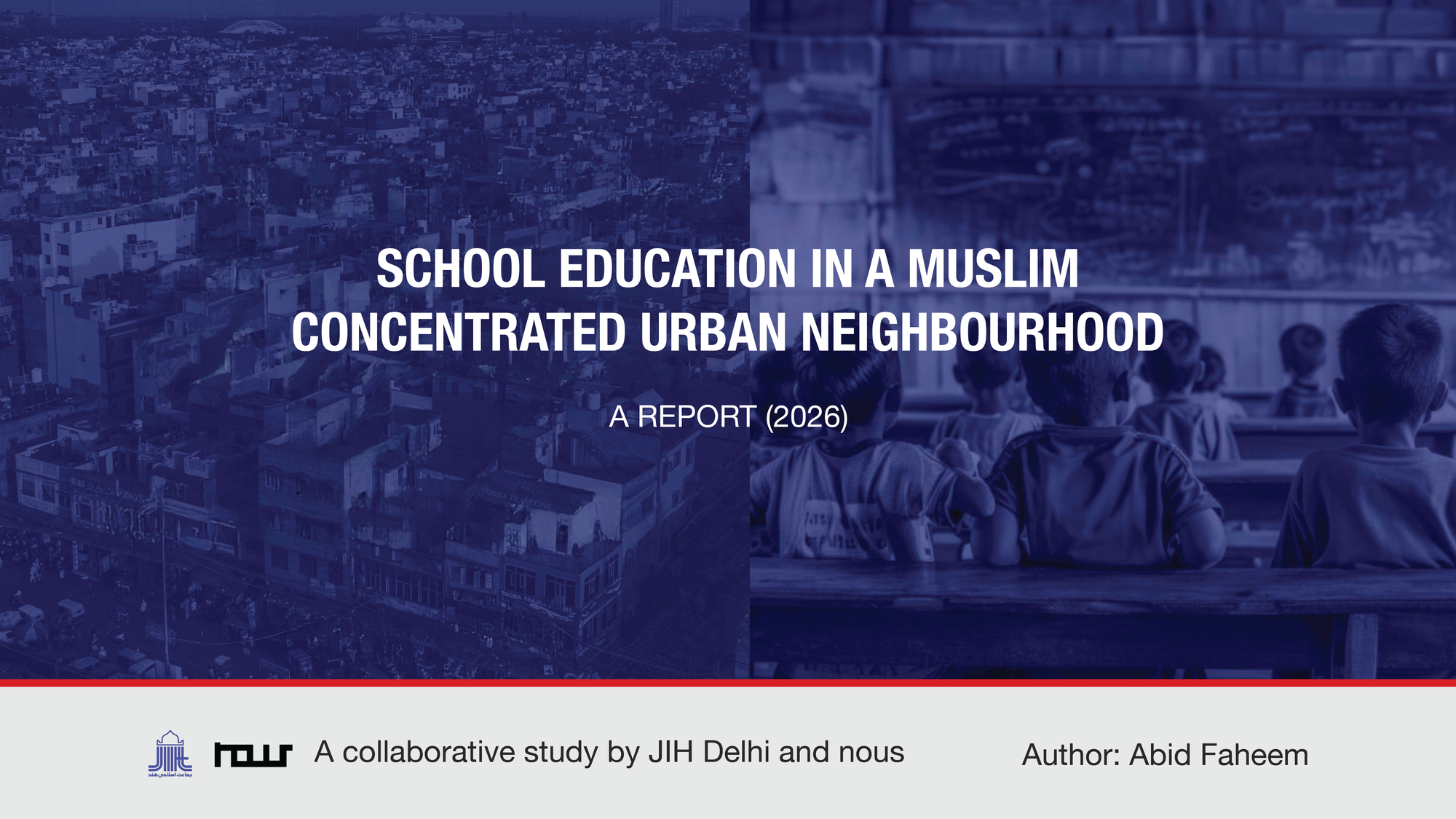
📘 Higher Education Report
In collaboration with the Centre for Study and Research (CSR)
This first-of-its-kind study maps the landscape of Muslim-managed higher education institutions (HEIs) across India — analysing their distribution, governance structures, academic offerings, and student composition. Drawing on national datasets and institutional records, the report highlights both the contributions and challenges faced by these institutions within India’s evolving educational ecosystem.
 Abid Faheem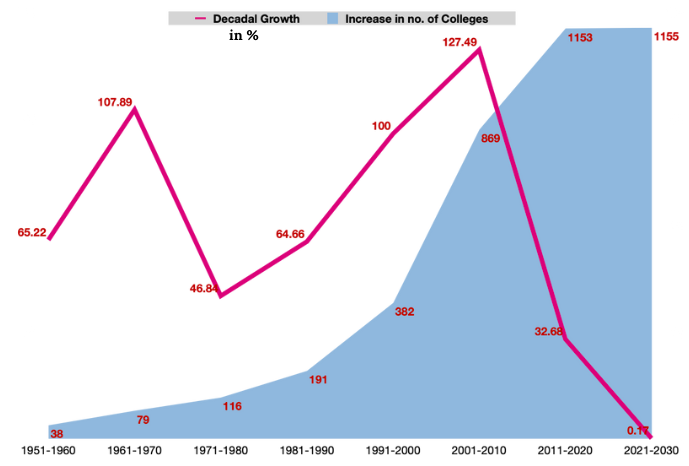
📊 Socio-Economic Conditions of Muslims in India (NFHS 2019 Analysis)
In collaboration with the Centre for Study and Research (CSR)
A comprehensive analysis based on the National Family Health Survey (NFHS-5, 2019), revealing persistent socio-economic inequalities and patterns of marginalisation among Indian Muslims. The findings contribute to policy discussions and help ground debates on inclusion in data rather than perception.