Dissent on Trial: The Incarceration of Umar Khalid & Sharjeel Imam
Six years on, the incarceration of Sharjeel Imam and Umar Khalid raises critical questions on dissent and justice. This documentary moves beyond headlines to examine the UAPA cases, their lived realities, and what their imprisonment reveals about protest and democracy in India.
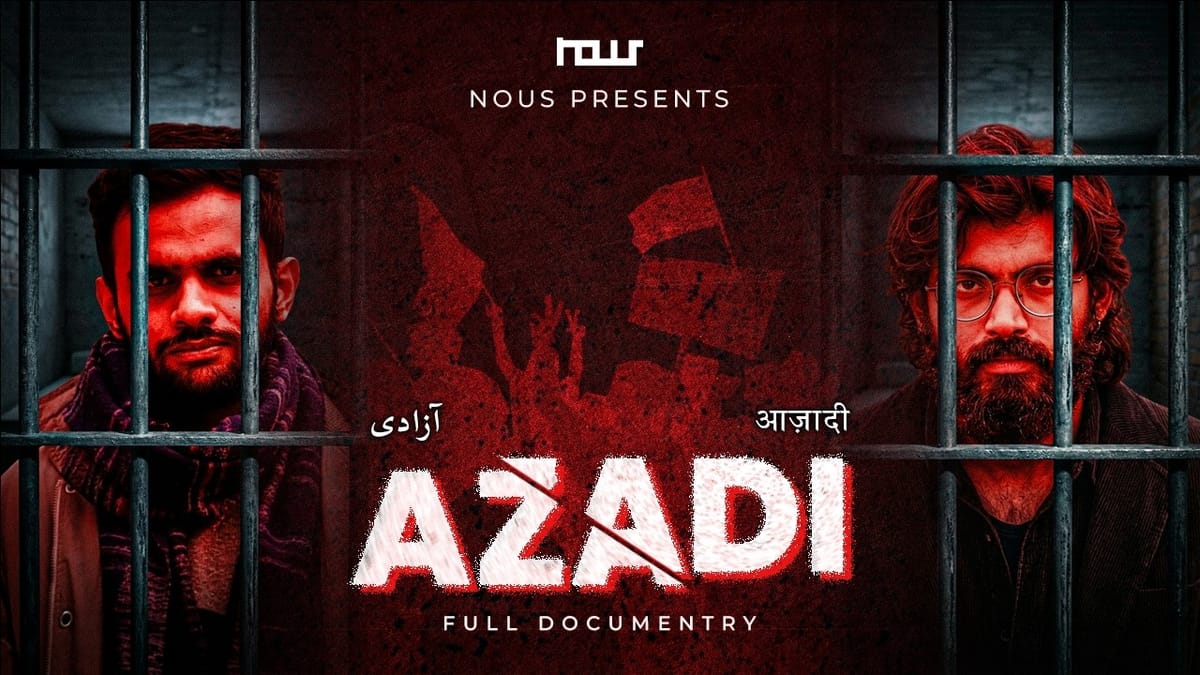
Six years have passed.
On January 5, 2026, the Supreme Court once again denied bail to Umar Khalid and Sharjeel Imam under the UAPA. Over time, their names have become familiar. You’ve probably heard them on TV debates, seen them in headlines, or in political speeches. But who are they, beyond the noise?
What exactly were they accused of? What led to charges under one of India’s most stringent anti-terror laws?
And why have their cases come to represent something larger about dissent, justice, and the criminalization of protest? In this documentary, we step away from the rhetoric and into their lived realities.
Through conversations with their loved ones, lawyers, activists, and civil society voices, we attempt to piece together their stories. This is not just about two individuals. It’s about the questions their unjust incarceration leaves behind and the future of our democracy.
Dissent, Law, and the Long Wait for Justice: Revisiting the Cases of Umar Khalid and Sharjeel Imam
UAPA, Protest Politics, and the Questions Facing Indian Democracy
Six years after their arrests, the continued incarceration of Umar Khalid and Sharjeel Imam remains one of the most debated and complex legal and political developments in contemporary India. Their cases—emerging from the protests against the Citizenship Amendment Act (CAA) and the proposed National Register of Citizens (NRC)—have come to occupy a space far beyond individual culpability or innocence. They now sit at the intersection of law, dissent, media narratives, and the evolving nature of democratic rights.
At its core, this is not only a story about two individuals navigating a prolonged legal process. It is also a lens through which broader questions can be examined: What constitutes dissent in a democracy? How should extraordinary laws be applied? And what happens when legal processes themselves become prolonged and punitive?
From Campus Politics to National Visibility
Both Umar Khalid and Sharjeel Imam emerged from India’s university spaces—traditionally sites of intellectual debate, political engagement, and ideological contestation.
Their trajectories into activism were shaped by different experiences but shared a common feature: a willingness to engage critically with questions of identity, citizenship, and state power. University campuses such as Jawaharlal Nehru University (JNU) have historically nurtured such engagement, often producing voices that move from academic inquiry into public discourse.
In this context, their participation in the anti-CAA protests was not an isolated moment, but part of a broader pattern of student-led political articulation in India.
The CAA Protests and a New Phase of Mobilisation
The protests against the CAA in 2019–2020 marked a significant moment in India’s recent political history. They brought together diverse groups—students, civil society actors, and ordinary citizens—across multiple cities.
One of the defining features of this movement was the emergence of new protest strategies. Sit-ins, public readings of the Constitution, and symbolic acts of resistance were combined with more disruptive forms such as road blockades.
These methods reflected a long tradition of civil disobedience in India, where protest is not only expressive but also intended to compel attention.
However, such strategies also raise difficult questions. Where does the line lie between legitimate protest and unlawful disruption? And who gets to define that boundary?
It is within this contested space that the actions and speeches of individuals like Khalid and Imam came under scrutiny.
The Legal Framework: Understanding UAPA
A central aspect of the case is the application of the Unlawful Activities (Prevention) Act (UAPA)—India’s primary anti-terror legislation.
Originally enacted to address threats to national security, UAPA has, over time, been expanded to include a wide range of activities categorized as “unlawful” or “terrorist.” One of its most debated features is the stringent bail provision, which makes pre-trial release exceptionally difficult.
In effect, this creates a situation where individuals may spend extended periods in custody while the trial process unfolds.
This raises a critical legal concern often discussed in judicial and academic circles: when trials are delayed, does prolonged incarceration risk turning the legal process itself into a form of punishment?
The Conspiracy Case and Evidentiary Complexity
The charges against Khalid and Imam form part of a broader conspiracy case linked to the Delhi riots of February 2020. The prosecution has argued that the protests were not spontaneous acts of dissent but part of a coordinated plan that led to violence.
The defence, on the other hand, has consistently challenged this narrative, arguing that the evidence does not substantiate claims of incitement to violence.
What complicates the matter further is the scale of the case. Charge sheets reportedly run into thousands of pages, with hundreds of witnesses. Such complexity inevitably slows down the judicial process.
In large conspiracy cases, establishing individual culpability becomes particularly challenging, as courts must distinguish between speech, intent, and action within a broader sequence of events.
Bail, Delay, and Judicial Interpretation
Over the years, multiple courts have examined aspects of these cases. While some related FIRs have resulted in bail orders, the primary conspiracy case continues to keep the accused in custody.
The denial of bail in such cases often hinges on judicial interpretation of intent, speech, and potential threat to public order. Courts are required to balance two competing imperatives:
- The protection of individual liberty, a fundamental constitutional principle
- The preservation of public order and national security
This balancing act is particularly difficult under laws like UAPA, where the threshold for bail is intentionally set high.
At the same time, prolonged delays in trial proceedings raise concerns about access to timely justice—an essential component of the rule of law.
Media Narratives and Public Perception
Another dimension shaping these cases is the role of media.
High-profile cases often unfold simultaneously in courtrooms and in public discourse. Television debates, headlines, and social media narratives can influence how individuals are perceived long before a judicial verdict is reached.
This creates a parallel arena of judgment—one that is faster, more visible, but not always bound by the standards of evidence required in law.
For individuals facing serious charges, such narratives can have lasting consequences, affecting not only public perception but also the broader climate in which legal proceedings take place.
Families, Time, and the Human Cost
Beyond legal arguments and political debate lies the lived reality of prolonged incarceration.
Years spent in custody without the conclusion of a trial affect not only the accused but also their families. The uncertainty of legal timelines, the emotional strain, and the social consequences form an often-overlooked dimension of such cases.
In many ways, time itself becomes a central factor—shaping both the experience of those involved and the public memory of the case.
Dissent in a Constitutional Democracy
At the heart of this discussion lies a fundamental question: What is the place of dissent in a democracy?
The Indian Constitution guarantees freedoms of speech, expression, and peaceful assembly. At the same time, these rights are subject to reasonable restrictions in the interest of public order and security.
The challenge lies in interpreting these boundaries in specific contexts.
When does protest become unlawful?
When does speech cross into incitement?
And how should the state respond in a way that preserves both security and democratic freedoms?
These are not new questions, but they have acquired renewed urgency in recent years.
The Broader Implications
The cases of Umar Khalid and Sharjeel Imam have come to symbolize a broader debate about the relationship between state power and citizen rights.
They highlight the complexities of applying stringent laws in politically sensitive contexts, the impact of prolonged legal processes, and the role of institutions in maintaining constitutional balance.
Importantly, they also underscore the need for clarity, consistency, and transparency in the administration of justice.
Conclusion: Beyond Individuals, Toward Principles
As the legal process continues, the significance of these cases extends beyond individual outcomes.
They invite reflection on the functioning of democratic institutions, the interpretation of law, and the space available for dissent in contemporary India.
A mature democracy is not defined by the absence of conflict, but by how it navigates disagreement—through law, dialogue, and institutional integrity.
In that sense, the ongoing cases serve as a moment of introspection.
Not only about guilt or innocence—but about the principles that underpin justice itself.
Support Independent Media That Matters
Nous is committed to producing bold, research-driven content that challenges dominant narratives and sparks critical thinking. Our work is powered by a small, dedicated team — and by people like you.
If you value independent storytelling and fresh perspectives, consider supporting us.
Contribute monthly or make a one-time donation.
Your support makes this work possible.