Iran is Reshaping the New World Order I Amaresh Misra
The 2026 Israel–US war on Iran marks a turning point in global geopolitics, as conflict extends beyond battlefields into energy, technology, and economic systems. This analysis examines how it is reshaping power, alliances, and a rapidly evolving world order.
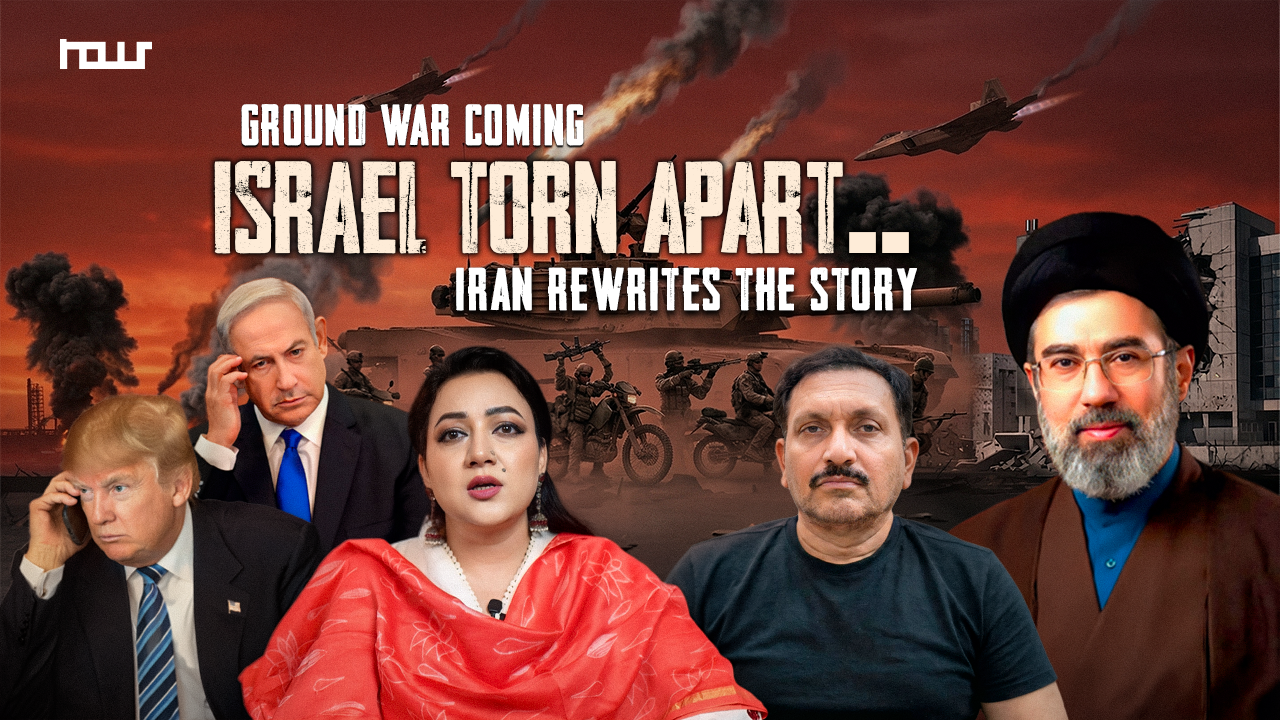
In an incisive conversation with senior journalist Bushra Khanum, author Amaresh Misra examines escalating tensions involving Iran, Israel, and global power alignments. The discussion questions narratives around military control, deterrence, and the possibility of wider regional conflict.
It explores whether Iran’s strategic depth and regional positioning could shift the balance, and how global actors, including the United States, are shaping perceptions of the crisis.
Reshaping the Global Order: Strategic Realities of the 2026 Iran–US Conflict
The events unfolding after February 2026 mark a decisive inflection point in contemporary geopolitics. What initially appeared as a contained military escalation between Iran, the United States, and Israel has rapidly evolved into a multidimensional conflict—one that is simultaneously military, economic, technological, and psychological.
This is no longer a conventional war defined solely by territorial gains or battlefield victories. Instead, it represents a deeper structural confrontation that is reshaping regional balances of power and accelerating the transition from a unipolar to a more fragmented, multipolar world order.
Beyond the Battlefield: A War of Narratives
One of the defining features of this conflict is the widening gap between official narratives and on-ground realities. Political rhetoric—particularly from Western leadership—has often projected premature success and strategic control. Yet, independent analyses suggest a far more complex and uncertain situation.
At the same time, Iran’s internal dynamics complicate long-standing assumptions about regime fragility. Rather than triggering widespread domestic collapse, external pressure appears to have consolidated segments of public sentiment. Periodic mobilisations—especially among youth and working-class groups—reflect a form of political consolidation that challenges the expectation that military pressure alone can produce regime change.
This divergence between perception and reality underscores a critical feature of modern warfare: the battle for legitimacy is as consequential as the battle for territory.
The Shift to Infrastructural and Technological Warfare
A striking dimension of the ongoing conflict is the targeting of critical infrastructure. Energy facilities, communication networks, and logistical nodes have emerged as primary sites of confrontation. Reported strikes on industrial and energy hubs indicate a strategic intent not merely to weaken military capability, but to disrupt the broader economic and civilian ecosystem that sustains the state.
Such tactics reflect a shift toward what analysts increasingly describe as infrastructural warfare—a model in which disabling systems becomes as significant as defeating armies.
Equally notable are the evolving technological dynamics. Reports of challenges to advanced aerial platforms, including stealth aircraft, suggest that asymmetrical innovation continues to redefine military hierarchies. Whether fully verified or not, these claims point to an important reality: technological superiority is no longer absolute, and adaptive strategies can offset conventional disadvantages.
The Prospect of Escalation: Limits of Military Strategy
As aerial and naval engagements reach diminishing returns, the possibility of a ground escalation introduces a new layer of risk. A direct land confrontation would not only intensify casualties but also prolong the conflict significantly.
Iran’s geography and defensive planning—characterised by decentralised command structures and fortified strategic zones—make rapid military breakthroughs unlikely. Any ground engagement, therefore, risks turning into a prolonged and costly entanglement rather than a decisive operation.
This raises a broader question about the limits of military power in achieving political objectives. History increasingly demonstrates that overwhelming force does not necessarily translate into sustainable outcomes.
Diplomatic Deadlock and Strategic Red Lines
Parallel to military developments is a persistent diplomatic impasse. While intermediary channels remain active, the gap between negotiating positions continues to widen.
Iran’s articulated conditions—ranging from sanctions relief to security guarantees—reflect a maximalist stance shaped by both strategic calculation and historical distrust. For the United States and its allies, conceding to such demands would signal a significant recalibration of regional influence.
The result is a classic stalemate: both sides possess enough leverage to resist, but insufficient alignment to resolve the conflict. In such conditions, prolonged instability becomes the default trajectory.
Regional Realignments and Strategic Ambiguity
The response of regional actors has been marked by caution and recalibration. Gulf states, traditionally aligned with Western security frameworks, are navigating a more uncertain environment where overt alignment carries increasing risks.
Simultaneously, broader geopolitical actors—particularly Russia and China—are shaping the strategic backdrop without direct military involvement. Their positions reflect a long-term interest in diluting unilateral dominance and promoting alternative power centres.
This layered alignment structure illustrates a key feature of the current moment: alliances are becoming more fluid, transactional, and context-dependent.
Economic Shockwaves and the Politics of Energy
Perhaps the most immediate global consequence of the conflict lies in the economic domain. Disruptions to energy infrastructure and transit routes—especially around critical chokepoints like the Strait of Hormuz—have far-reaching implications for global markets.
Rising energy prices, supply chain disruptions, and inflationary pressures are already affecting economies far removed from the conflict zone. In this sense, the war is not geographically contained; its effects are diffused across interconnected economic systems.
More importantly, the selective control of energy flows introduces a new strategic variable. Energy is no longer merely a resource—it is a geopolitical instrument capable of shaping alliances and exerting pressure far beyond conventional military means.
Rethinking Power in a Multipolar World
At a deeper level, the ongoing conflict reflects a structural transformation in global power distribution. The era in which a single power could unilaterally dictate outcomes is increasingly contested.
Instead, what is emerging is a more fragmented order characterised by competing centres of influence, overlapping interests, and strategic ambiguity. In such a system, conflicts are less likely to produce clear winners and more likely to generate prolonged instability.
Conclusion: A Conflict Without Clear Endpoints
The 2026 Iran–US confrontation is not merely another episode in the history of West Asian conflicts. It represents a broader shift in how power is exercised, contested, and negotiated in the 21st century.
Military engagements are now intertwined with economic disruption, technological adaptation, and narrative control. Diplomatic pathways remain constrained, while regional and global actors recalibrate their positions in real time.
What emerges is a conflict without a clear endpoint—one that resists simple categorisation and challenges conventional frameworks of analysis.
In this evolving landscape, the central question is no longer who will win, but what kind of world order will take shape in its aftermath.
Support Independent Media That Matters
Nous is committed to producing bold, research-driven content that challenges dominant narratives and sparks critical thinking. Our work is powered by a small, dedicated team — and by people like you.
If you value independent storytelling and fresh perspectives, consider supporting us.
Contribute monthly or make a one-time donation.
Your support makes this work possible.