Iran, Energy, and Escalation: A War Without Limits I Zaki Zaidi
This conversation examines how the Iran conflict is shifting beyond conventional war into a broader contest over energy and infrastructure. As strategic targets expand, it explores the implications for regional stability, global markets, and the evolving nature of modern warfare.

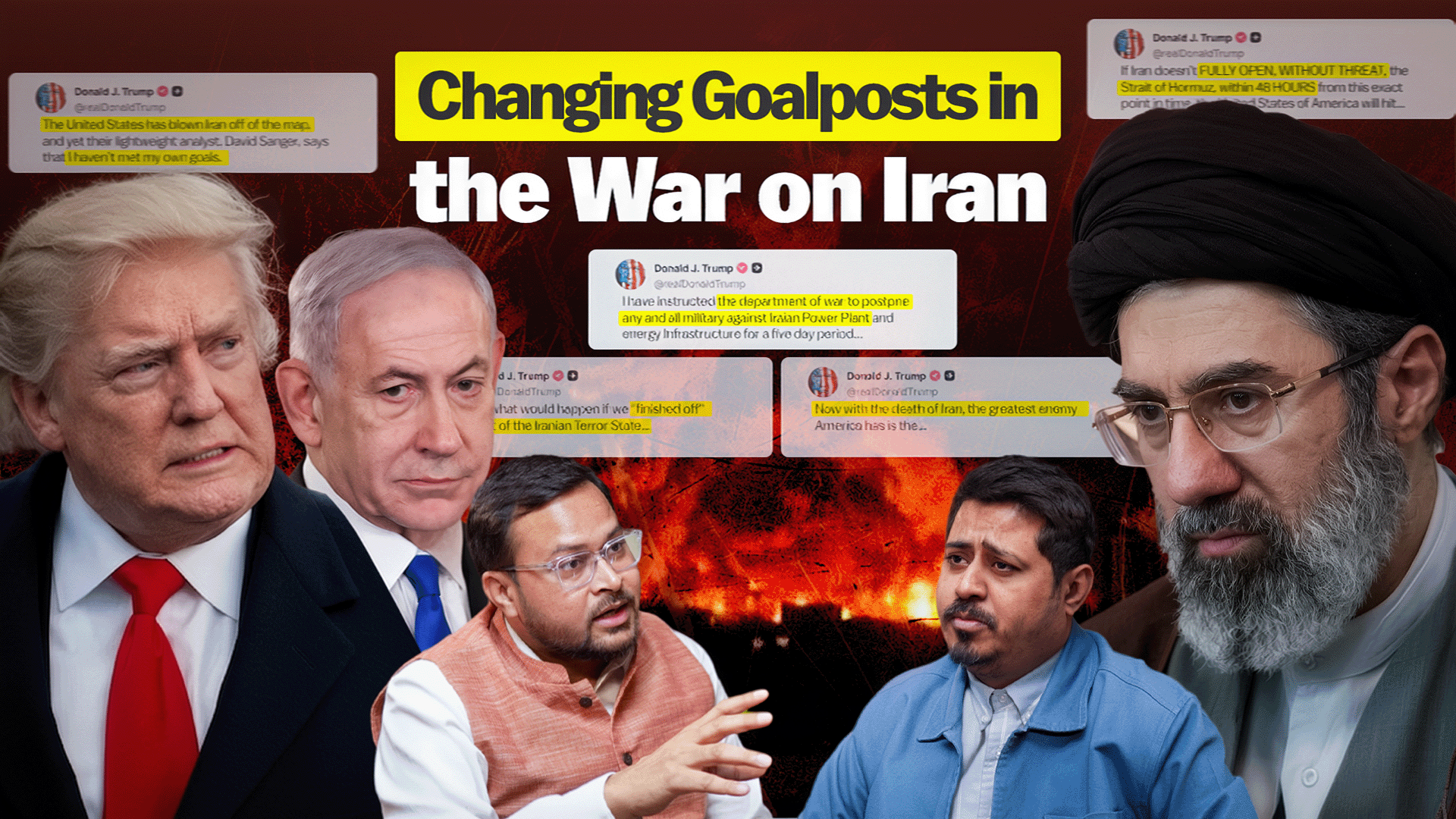
In this timely and probing conversation, Asad Ashraf speaks with Zaki Zaidi to examine how the ongoing Iran conflict is evolving beyond the contours of a conventional military confrontation. What appears at first glance as a strategic exchange of force is increasingly taking the shape of a broader economic and infrastructural contest.
As targets expand to include critical energy assets—power grids, oil facilities, and vital maritime routes such as the Strait of Hormuz—the conflict begins to resemble an emerging form of “energy warfare,” with implications that extend far beyond the battlefield. The shifting objectives raise important questions about whether the focus has moved from deterrence to deeper structural pressures, including economic destabilisation and regime strain.
The discussion situates these developments within a wider regional and global context, reflecting on their potential impact on civilian life, supply chains, and economic stability across interconnected markets. If energy systems themselves become central to conflict, escalation may no longer remain contained or predictable.
Brief yet layered, this exchange offers a framework to understand a rapidly transforming conflict—one that challenges conventional definitions of war and compels a rethinking of its long-term consequences.
Crisis, Diplomacy, and the Limits of Silence: Rethinking India’s Role in a Volatile West Asia
Strategic Restraint or Strategic Drift in a Changing Global Order?
At a time when global politics is being reshaped by conflict, energy insecurity, and shifting alliances, India’s foreign policy faces one of its most significant tests in recent years. The escalating tensions in West Asia—particularly involving Iran, Israel, and the United States—have not only destabilised the region but also exposed the difficult choices confronting emerging powers like India.
In a sharply analytical conversation, senior political voices reflect on a pressing question: Does India’s measured response to the crisis reflect strategic maturity, or does it signal a deeper uncertainty in its global positioning?
West Asia: A Region Too Important to Ignore
For India, West Asia is not a distant geopolitical theatre. It is a region deeply intertwined with its core national interests.
A significant portion of India’s energy imports flows through the Strait of Hormuz, one of the world’s most critical maritime chokepoints. Any disruption in this narrow passage has immediate consequences for India’s economy—affecting fuel prices, inflation, and fiscal stability.
Beyond energy, the region is home to millions of Indian expatriates whose remittances contribute substantially to the national economy. Trade, infrastructure cooperation, and defence partnerships further deepen India’s engagement with the region.
In this context, instability in West Asia is not an external crisis—it is a direct strategic concern.
The Question of Silence
One of the central themes in the discussion is India’s relatively cautious public posture amid the crisis.
India has traditionally avoided taking overtly partisan positions in complex international conflicts, preferring calibrated statements that call for de-escalation and dialogue. This approach aligns with its long-standing principle of strategic autonomy.
However, in moments of heightened conflict, silence—or perceived silence—can be interpreted in multiple ways.
- As strategic restraint, reflecting a desire to preserve diplomatic flexibility
- Or as strategic ambiguity, raising questions about clarity and leadership
The distinction between the two is subtle but significant. In a rapidly evolving geopolitical environment, perception can shape influence as much as policy itself.
Energy Security and Economic Vulnerability
The ongoing tensions have brought energy security into sharp focus.
With global oil markets reacting to even the possibility of disruption in the Strait of Hormuz, India’s dependence on imported energy exposes it to external shocks. Rising crude prices translate into increased costs across sectors—from transportation to manufacturing—ultimately affecting household budgets.
This highlights a structural challenge: while India has diversified its energy sources over the years, it remains vulnerable to geopolitical instability in key regions.
The crisis therefore underscores the need for long-term strategies—ranging from energy diversification to strategic reserves and renewable transitions.
The Iran–Israel Dynamic and Risks of Escalation
The intensifying confrontation between Iran and Israel adds another layer of complexity.
Unlike previous cycles of indirect confrontation, the current tensions carry the risk of broader escalation. Military posturing, proxy engagements, and rhetorical escalation have all contributed to an environment of uncertainty.
One of the most concerning aspects of the discussion is the possibility—however remote—of escalation involving advanced weaponry. While the likelihood of nuclear use remains low due to global deterrence structures, even the suggestion of such scenarios reflects the gravity of the situation.
For countries like India, which maintain relationships with multiple actors in the region, such escalation would present both diplomatic and economic challenges.
Navigating Great Power Politics
The crisis is also unfolding against the backdrop of broader shifts in global power.
The United States continues to play a central role in West Asian geopolitics, but its dominance is increasingly contested by the growing influence of China and the strategic positioning of Russia.
China’s expanding economic footprint in the region—through infrastructure investments and energy partnerships—has introduced a new dimension to regional dynamics. Russia, meanwhile, continues to engage through security and diplomatic channels.
For India, this evolving landscape requires careful navigation. Aligning too closely with any single power risks limiting strategic flexibility, while maintaining equidistance demands diplomatic agility.
Can India Be a Stabilising Force?
A recurring question in the conversation is whether India can play a more active role in shaping regional stability.
Historically, India has not positioned itself as a primary mediator in West Asian conflicts. Its approach has been guided by non-interference, bilateral engagement, and support for multilateral frameworks.
However, as India’s global ambitions grow, expectations around its role are also changing.
To act as a stabilising force, India would need to:
- Leverage its relationships across competing actors
- Build credibility as a neutral and consistent partner
- Engage more actively in diplomatic forums addressing regional crises
This is not without challenges. Mediation requires not only intent but also acceptance by all parties involved—a complex task in a deeply polarised environment.
Strategic Autonomy in a Multipolar World
The broader issue underlying the discussion is the evolving meaning of strategic autonomy.
In a unipolar world, autonomy often meant maintaining distance from dominant powers. In a multipolar system, it requires balancing multiple relationships simultaneously while safeguarding national interests.
This is inherently more complex.
Strategic autonomy today is less about non-alignment and more about multi-engagement—the ability to work with diverse partners without becoming dependent on any one of them.
The current crisis tests this capability.
Conclusion: Between Caution and Clarity
India’s response to the West Asian crisis reflects both continuity and challenge.
On one hand, its cautious approach aligns with a long tradition of measured diplomacy. On the other, the scale and intensity of current global shifts demand greater clarity, coherence, and strategic articulation.
The key question is not whether India should abandon restraint, but how it can combine restraint with relevance.
In an increasingly volatile world, influence is shaped not only by economic or military power, but by the ability to respond effectively to crises—through diplomacy, credibility, and strategic vision.
As West Asia continues to evolve, India’s choices will not only affect its immediate interests, but also define its role in the emerging global order.
Support Independent Media That Matters
Nous is committed to producing bold, research-driven content that challenges dominant narratives and sparks critical thinking. Our work is powered by a small, dedicated team — and by people like you.
If you value independent storytelling and fresh perspectives, consider supporting us.
Contribute monthly or make a one-time donation.
Your support makes this work possible.